Wednesday, June 1, 2022

Airfryer Strawberry Chimichangas


You guys know, I think, how much I love my airfryer. I've shared a few recipes here over the years, most with a twist on traditional dishes. And today, I have another one!

Air Fryer Strawberry Chimichangas


Are you ready to try something different this summer? It'll be an adventure. Who knows? It may these airfryer strawberry chimichangas may turn out to be your new favorites!

Tools You'll Need


Of course, you'll need an airfryer! Eight years ago, I got a Philips airfryer and it is still going strong! But I am probably in need of an upgrade because I really need a bigger one. Here's the airfryer I'm considering. 


Ingredients


To make your strawberry chimis, you'll need:

  • 6 burrito-sized tortillas
  • 8 oz whipped cream cheese
  • 1 Tbs vanilla extract
  • 1 cup sliced strawberries
  • 1 cup Greek yogurt
  • 1 cup brown sugar
  • 1/2 cup melted butter
  • toothpicks

Directions


Makes six chimis.


Preheat your airfryer to 350 degrees.


Slice your strawberries. 


Then, in a mixing bowl, go ahead and combine them with the whipped cream cheese, vanilla extract, and Greek yogurt.


Divide the strawberry mixture evenly between the 6 tortillas and place a spoonful of the mixture in the center of each tortilla.


Roll up the tortilla and use a toothpick to hold it closed.

Lightly coat the chimis with melted butter and place them in the airfryer.


Air fry for five minutes or until the tortillas have turned a golden brown color.


Remove the toothpicks.

Roll each of the chimichangas in brown sugar (optional).

Serve and enjoy!


Want to find this recipe again? Pin it!


Other Posts You May Enjoy


Monday, May 30, 2022

How to Start a Book Club for 8 to 12-Year-Olds


​​If you’re looking for a way to get your child reading, start a book club! It’s a great way to encourage kids to read for pleasure, and it can help them develop important skills like critical thinking and communication. Here are some tips on how to start a book club for 8 to 12-year-olds.

Choose a location


Your home could be an option for a book club location, or you might want to look into local community centers and libraries that offer space for peer groups to meet. These days, you could also do a virtual option. Or you can enlist help from your mom friends and rotate homes for each meeting. If you do choose to meet in person, be sure to check with the parents of potential members to ensure that their child is comfortable coming to your home.


Decide on a format


There are lots of different formats you can use for your book club, including: 
  • read aloud discussion, 
  • guided reading, 
  • and independent reading. 
If the kids read independently at home, they can then come prepared to answer questions about the book. Or have each child bring a question they have about the story.

Get creative! You could have the kids make a craft related to the book at each meeting. Or pull out the LEGOs and have kids build something that relates back to the book: a scene, a person, or an object. Or you might choose books that are also available as movies and then watch the film at each meeting. 

Keep trying new formats as you go along and see what works best for your group. You may find that some formats work better for certain types of books.


Choose books wisely


While it's important to pick books that everyone will enjoy and that encourage critical thinking skills, it's also important that they are at the right reading level. 

Additionally, try to look for books with a good mixture of male and female characters, as well as characters from different backgrounds and cultures. Diverse books are always a good choice. You can find a lot of them here on MommyMaestra.


Encourage discussion


Discussing the books is an essential part of a book club, so be sure to pick titles that will spark interesting discussions! You can even have your own "mystery box" that contains possible book choices, and let the kids choose from there.

If you don't want to read the books yourself, then you can: 
  1. have your child lead the group and come up with questions to ask, or
  2. look online for discussion questions. 
Author websites and publisher websites often have lesson plans or discussion questions that can be downloaded. But TpT is also a good place to look.


Put rewards in place


Whether it's a small prize or public praise, make sure the kids have some sort of reward in place to encourage their participation. Don't be afraid to add your own personal touch to this!

Here are a few reward ideas for kids ages 8 to 12.


Start small


Remember, you don't have to start with a huge group. A smaller group of dedicated readers is better than a large group that doesn't participate. You can always build up from there. Quality over quantity! (It's also a lot easier to manage and more budget friendly, depending on your reward plans.)


Be flexible


Try to be flexible with your book club plans. If a child can’t make it to a meeting, don’t force them to come. And if someone wants to bring a friend, that’s great! The more the merrier.


Use printable activity sheets


If you do a quick search for "book club printables" there are a lot of great options that come up. Think about using reading logs, book reports, bookmarks, reading craftivities, etc. Or challenge your children to design their own book club signs, member roster, book list, etc.

Later this week, I'll share some bilingual book club printables I designed and link to them here.


How to modify the book club for specific themes


If you want to focus on a specific theme for your book clubs, like science fiction or mystery, you can use these steps as a guide. Just make sure to choose books that fit the theme, and encourage discussion around that topic. You might even want to create some themed activities to go along with the reading.

Example: Summer Book Club


A good example of modifying a book club would be a summer book club. You can include classics like Jules Verne's Around the World in 80 Days or contemporary titles like Jeff Kinney's Diary of a Wimpy Kid.

Example: Hispanic Heritage Month Book Club for kids


If you're looking for a way to celebrate Hispanic Heritage Month with kids, a book club is a perfect option. You can use books like Esperanza Rising by Pam Muñoz Ryan or The Mystery of the Mischievous Marker: A Mickey Rangel Mystery by René Saldaña Jr. or Bravo!: Poems About Amazing Hispanics by Margarita Engle if you are looking for books by Latino authors.

Example: Women's History Month for kids


If you're looking for a way to celebrate Women's History Month with kids, a book club is a perfect option. You could focus on books featuring strong female protagonists like The Hunger Games by Suzanne Collins or Wonder Woman: Warbringer by Leigh Bardugo.


Where is the best place to buy books for book clubs?


First, always try your local library. Especially if the book club members live in different areas. But if your book club consists of neighborhood kids, chances are your library won't have enough copies for everyone. So, the best place to buy books for book clubs is typically a local bookstore or online retailer. Many bookstores will offer discounts for book club purchases, and you can often find good deals on used books as well. 

If you're looking for specific titles, it's usually best to check online retailers like Amazon.com or Barnes & Noble.


How should an adult be involved in the book club?


Your level of involvement as an adult has in your children's book club will ultimately depend on the group's preferences. Some clubs may prefer that adults take a more hands-off approach, while others may appreciate having an adult chaperone or facilitator. Ultimately, it's up to the group to decide what level of involvement is best for them. You may lead discussions or just provide snacks and help with set up! 

Starting a book club can be a great way to encourage kids to read and discuss books critically. By choosing wisely, you can create a book club that is interesting for kids and encourages discussion. Be sure to have rewards in place to motivate the kids, and try to be flexible with your plans. If you want to focus on a specific theme or holiday, you can easily modify the book club to fit your needs.

Have you ever started a book club for kids? How did it work out?


Other Posts You May Enjoy


image source: Canstock Photo - Ferli

Friday, May 27, 2022

Book Review: TEACH by Dennis Dinoia

TEACH by Dennis Dinoia

This is a sponsored book post. All thoughts and opinions are mine.

Every kid is different. We all know that. And if you have more than one child at home, you know that different kids sometimes require different instruction or motivation. 

One of the comments I see a lot of in the homeschool groups I run or am a member of is: How do I get my kid to work on his/her own? I have certainly struggled with this myself. My oldest just graduated and has always been self-motivated. Never did I tell her to go get her school work done. (She was actually only homeschooled until high school, then went to a private school to finish out.)

But at home, I am still homeschooling a sophomore and a preschooler. Actually, they are both about to move up a "grade."  But I frequently tear my hair out because my 16yo has to be badgered all the time to get his school work done. Every. Single. Day. I have to tell him to get it done. 

So I was pretty interested when I heard that Dennis Dinoia of Mr. D Math was coming out with a book that specifically talks about how to get kids to be responsible for their own education. 

TEACH by Dennis Dinoia


Raising Independent Learners

TEACH: Creating Independently Responsible Learners helps parents become their children's education partners, rather than their monitors, hand-holders, or naggers. 

Inside the pages of this book, you'll learn what exactly he means when he uses the term independently responsible learners (umm, it's exactly what it sounds like). But what I enjoyed most, is learning different techniques for nurturing my child's ability to learn independently....and  willingly. 

Dennis shares his ah-ha moments as a teacher that led to his strategy for developing independent learners. Some of these techniques I recognized from my own days as a student, as well as a homeschooling mom. For example, making the student the teacher. This is something I often told my kids when they were younger: "If you can teach it to me, or each other, or someone else, then you will understand it." I can't believe that I FORGOT this trick now that my middle kid is in high school where it would be sooo effective!! Ugh. 

But that's why I love this book. And it's how I know that the guidance inside these pages is solid.

It also includes a bonus chapter at the end to help you or your student set goals. He literally walks you through it and gives you the tools you need to visually lay out a plan that you can follow.


Change Your Mindset


If you are a homeschool mom like me who is feeling a lot of burnout after a few difficult years (let's face it: they were hard for everyone), and you are looking for an inspirational book to help you reset your mindset, this book is definitely for you. 

Even if you have fairly self-motivated kids who get their work done without being told to do so, this book has some wonderful techniques for you to implement to continue nurturing their independent spirit when it comes to their education.

We are about to stop schooling for the summer (and don't get me wrong, I've been looking forward to relaxing this summer), but I'm already looking forward to implementing many of the techniques discussed in this book. 


The Discount

The paperback version of this book is $14.95 on Amazon. BUT between now and June 15, 2022, you can get the eBook for just $.99! Don't wait. If you have a collection of books about homeschooling or teaching, this is one is a must-add.

Want to find this post again? Pin it!

TEACH by Dennis Dinoia


Other Posts You May Enjoy


Wednesday, May 18, 2022

Spring Flowers Pronoun Game in Spanish


For some of us, it feels like spring has already sprung and been squashed by summer. But for most of people, warmer temperatures and blooming gardens are filling the days. Now is a good time to keep up your child's Spanish lessons with this month's freebie from MommyMaestra sponsor, Spanish for You!, a perfect activity for young Spanish learners!

This month's freebie is a game for learning about personal pronouns. Spring Flowers Pronoun Game helps your young student learn the Spanish words for pronouns. This three-page download comes with instructions, a pronoun help sheet, and a game sheet.


Download the printable file here


-----------------------------


Remember! Spanish for You!'s program is geared for middle schoolers and is the perfect choice for homeschoolers and afterschoolers alike because their concepts are carefully divided up into manageable bundles that are available for immediate download from their website.

If this is your first time here, you can find other free samples from Spanish for You! here. There are some fantastic downloads of games and activities for you and your family to enjoy. If you enjoy this activity, be sure to visit the Spanish for You! website where you'll find tons of additional resources for you to help your young Spanish learner!


Other Posts You May Enjoy:


Thursday, May 12, 2022

Pablo Neruda Reading Passage


Pablo Neruda is such a controversial figure. People seem to either love him or hate him.

Either way, parents and teachers are looking for resources to study the poet. And these resources can be hard for a person to find. It seems like the online lesson plans come and go, but I just updated my post Pablo Neruda Lesson Plans, Videos, Books, and More. 

This post contains affiliate links.

Pablo Neruda Reading Worksheet

I have also gone ahead and adapted the one-page reading passage in my Hispanic Poets packet into a more lengthy, stand-alone activity. It is now available in my TpT store.

This is an age-appropriate short biographical intro to the poet, not the politician. 

It's best suited for students in 4th through 7th grade and is available in both English or Spanish - you choose the language that meets your needs. 

And, yes, it does include an 8-question quiz to test your student's comprehension. 

How to Use It

This reading passage may be:

  • assigned as homework, 
  • for an in-class assignment, 
  • as an activity for a sub,
  • as part of a larger lesson plan (see my post on Neruda lesson plans)

You can also have your students use it to:
  • read aloud to practice pronunciation in Spanish or English
  • create a story board
  • fill out a story map
  • write a summary
  • complete a K-W-L chart
  • create a timeline of Neruda's life
  • identify and define new vocabulary
  • find Chile on a map
  • write their own poem...in a different colored ink?
  • write a character analysis
  • complete a Venn diagram to compare/contrast Neruda with another poet

This reading passage would do well with studies about Neruda, Chile, poets, writers, literature, nature, Hispanic Heritage Month, historical figures, and more.

And if you are looking for a book that would pair nicely with this introduction, I recommend:


The Dreamer by Pam Munoz Ryan and Peter Sis. It's also available in Spanish: El soñador


Other Posts You May Enjoy:


Wednesday, May 4, 2022

40 Ways to Keep Your Child Excited About Reading


Happy May! 

For some, the end of the school year is in sight. For others, school will continue through the hot summer months. Either way, your child's reading development should be one of the things you stay on top of this summer.

This month, we'll be focusing on summer reading: tips, books, strategies, and more.

One challenge that parents face during the summer is keeping their kids excited about reading. So we've put together a short list of ways to make reading fun.

Did we miss one? Let us know!

Read with your children
© Can Stock Photo / evgenyatamanenko


40+ Ways to Get Your Kids Excited About Reading

  1. Read with your child.
  2. Make it special and set up a comfortable reading nook just for your child.
  3. Visit the bookstore or library on a weekly basis.
  4. Translate a story!
  5. Read the book...then watch the movie... or vice versa! Discuss which one you liked better and why.
  6. Involve friends. Invite your child's friends over for a book swap party.
  7. Create your own book club and meet weekly to discuss new books.
  8. Make puppets and then have your child(ren) put on a puppet show of the story for friends and family.
  9. Dress up in costumes and re-enact the story! (Who doesn't love a good play?)
  10. Write up a book report.
  11. Read to a pet!
  12. Help your child create a video book review!
  13. Add variety. Read books, magazines, eBooks, cookbooks, fiction, non-fiction, biographies, comic books, graphic novels, classics, action & adventure...
  14. Ask your child to write and illustrate his/her own story.
  15. Read outside.
  16. Read in the car.
  17. Download an eBook app, such as Epic, Storia, or Readyland.
  18. Go to the park to read!
  19. Make up different endings.
  20. Buy picture books without words and make up your own story.

    © Can Stock Photo / Choreograph

  21. Read to a stuffed toy.
  22. Use story boards.
  23. Make meals mentioned in the story.
  24. Create a felt story board.
  25. Join a summer reading program.
  26. Listen to audiobooks.
  27. Create a reward chart.
  28. Use reading logs to record their progress.
  29. Use story cubes.
  30. Use incentives (these can be physical items or simple privileges).
  31. Read aloud. Pick a book you both love and take turns reading to each other.
  32. Dress it up! Gift wrap a book you've carefully selected and give it to your child as a gift.
  33. Make sure your child is reading books on her level. Books that are too difficult or advanced make reading a lot less fun.
  34. Buy a fun book light at the dollar store. 
  35. Bribery! (Lol!!)
  36. Give your child his own library card.
  37. Stay up late reading!
  38. Read to a friend.
  39. Read to Abuela or Abuelo (Grandma or Grandpa).
  40. Let your child choose the book.
  41. Find books on topics your child is interested in.
  42. Vary your child's reading routine.


Other Posts You May Enjoy


Wednesday, April 27, 2022

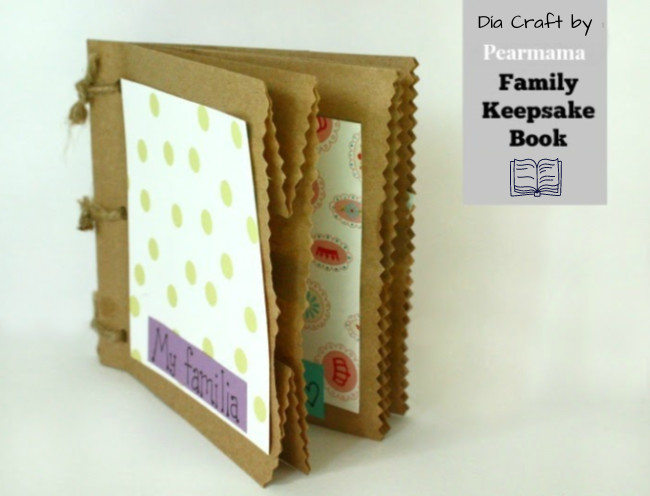
Día Craft: Make Your Own Family Keepsake Book


This week, we continue our series on Día inspired crafts. These are literacy-based crafts that kids can put together. And these are fun activities that promote a reading culture at home. Today's craft comes from guest contributor and artist Denise Cortes, who originally wrote this for L4LL. If you enjoy this tutorial, check out her other one: DIY Book-Inspired Sports ID Tag.

We hope your children enjoy this tutorial for making their own DIY family keepsake. 
This post contains affiliate links.

Día de los Niños Craft: Bookmaking


My kids are really sentimental when it comes to family photos. One of our favorite things to do as a family is to thumb through their baby books and photo albums. We all laugh at the memories and by the end, I’m usually in tears. Why must childhood be so fleeting?

I wanted to teach my daughters how to make a DIY family keepsake book so they could collect photos, small notes and drawings, keeping alive the tradition of documenting our family.

This craft project is inexpensive and fun for everyone! 

Materials:


Directions:

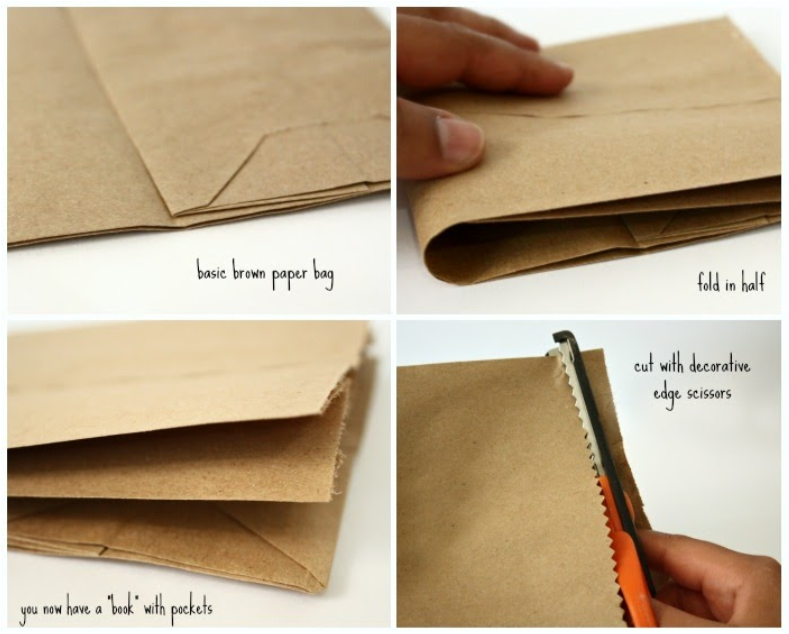
What I love most about this project is we’re repurposing an inexpensive brown paper bag. It’s as simple as folding a bag or two in half, sandwiching them together, poking a few holes on one side and threading a piece of twine or ribbon to bind them together. After trimming one side with a pair of decorative edge scissors, you will have a “book” with pockets, similar to an accordion.


If you want to make the “book” thicker, use more than one paper bag. I used two, which allow me to have four pockets for sliding in photos and keepsakes.


To bind the paper bags together, make three holes along the edge that is opposite to the opening side.


Now you are ready to decorate your book. Find a few patterned sheets of scrapbooking squares. Cut them down to size so they can fit properly.


Glue down each piece of scrapbooking paper onto the “pages” of your book. Add a smaller piece of solid color paper and glue it on top of the scrapbooking paper, toward the bottom. This space is for any captions such as: My Family, Mama, Papa, Brother, Sister, Abuelita, etc. Remember, you are celebrating family!


The final step is to thread the book with a piece of jute twine, to bind all of the pages together. Be sure to tie a tight knot.


Now you can fill up your keepsake book with pictures, notes, and photo booth pictures!


Monday, April 25, 2022

Reading Challenge & Passport

 Bilingual Reading Passport

This week, I'm continuing our Día de los niños series with a free download. If you're a MommyMaestra subscriber, you'll find this printable reading passport in your inbox this evening. If not, you can purchase my reading passport file in my TpT store. 

Scroll down to the bottom of this post or sign up here for my newsletter.


Bilingual Printable Reading Passport

This reading passport is easy to print and assemble.  

  1. Make sure to select "Actual Size" on your printer settings, or "Custom" and "100%."

  2. Print pages 3 and 4 on two separate pieces of paper (Do not select "Print on both sides of paper.")

  3. Fold page 3 in half with the printed side facing out. 

  4. Fold the page in half again with the dark blue covers on the outside.

  5. Repeat steps 3 and 4 with page 4.

  6. Tuck page 4 inside page 3. 

  7. Staple in the middle to hold the booklet together.
The passport has text in both Spanish and English.


How to Use This Reading Passport

You can use the reading passport like a reading log for your child. Just let them enter the titles and authors of the books they've read and keep it like a running account. There is no limit to the number of inner pages you can print and add to your child's passport.

OR you can assign your child a reading challenge...

Latino kid lit


Reading Challenge

I'm always thinking about ways to get kids excited about reading. And one of those is with a reading challenge. 

One simple and easy challenge is to have your kids read 8 books in one month. You can set the details based on your child's interests and reading level (picture books, chapter books, poetry, etc.), or just let them choose which books they want to read.

Other challenges could be for the summer or school year. You can require books by Latino authors, classics, novels, short stories, books in Spanish, biographies, or even graphic novels. You can also challenge your student to read one book from each genre.

Whatever you do, be flexible and have fun!


Other Día Posts You May Enjoy:


Subscribe to my newsletter for free downloads!

* indicates required

Friday, April 22, 2022

Día Craft: Music-Themed Magazine Holder


Here is another fun craft that nurtures a reading culture in your home. Today's tutorial comes from guest contributor Dariela Cruz of MamiTalks, who originally wrote this for L4LL. 

Magazine holders are so useful. I never think of them for the kids’ room, but even if the kids don’t have any magazines, they always have coloring books, reading workbooks, math workbooks, or notebooks that can definitely be organized better inside a magazine rack.

This post contains affiliate links.

Día de los Niños Craft: Themed Magazine Holder


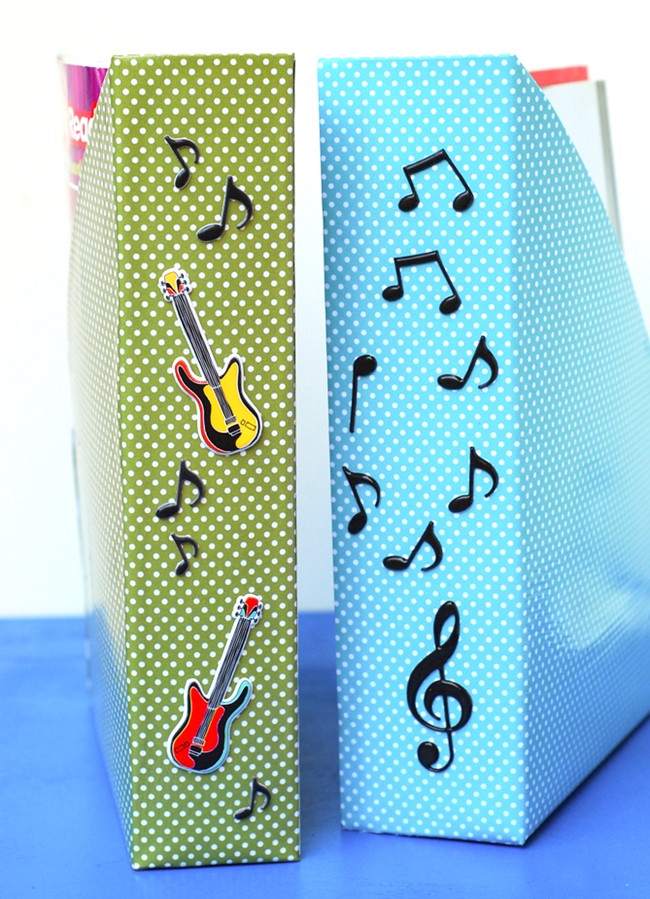
This magazine rack is made out of a cereal box, some scrapbooking paper, and stickers. It is very easy to make and the kids can help, too. 

This one has a musical theme and can be very useful for storing sheet music and/or music notebooks. But let your child choose the theme that appeals to them the most. There are many wonderful designs of scrapbooking paper available for each kid’s preference. 

Guide them through this craft and they will love making something useful for their own room!


Supplies:


Instructions:


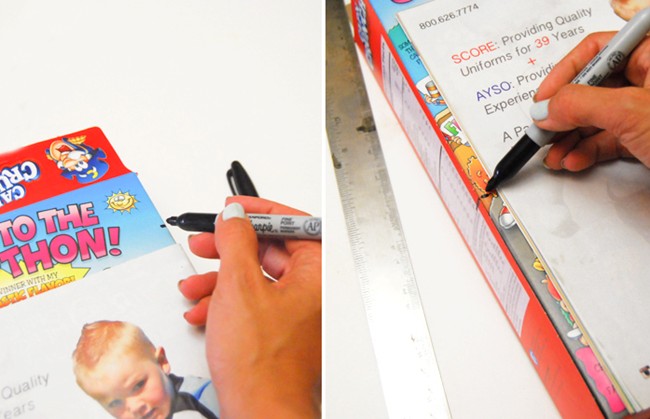
Grab the empty box of cereal and place a magazine on top of it.

Make marks with the permanent marker on one side of the box a little bit higher than the magazine height and on the other side make a mark a little bit lower than the half of the magazine’s total height.


Draw a line joining both marks then continue on the other side with the help of a ruler.


Carefully cut the box with scissors (or with a craft knife) along the marked lines.


The structure of the magazine holder is done. Now to decorate it!


Use the first scrapbooking paper and lay the box on top of it. NOTE: it will cover only two sides of the box. 

With a pencil mark the paper leaving space for flaps on every side and the top and bottom, they don't need to be precise, just make sure you have them all, then cut along your marks with scissors.


Once the paper is cut, apply the glue with a brush to all its areas.


Glue the paper around the two sides of the box.

Mark, cut, and glue the second scrapbooking paper the same way as the first but don’t leave flaps on 2 sides so that the border of the paper is exactly aligned with the edge of the box.


Once the whole magazine holder is wrapped with paper, apply the decoupage glue all over it and let it dry for a couple of hours.


Cut a small rectangle of scrapbooking paper and place it on the inside of the back of the magazine holder. This part will show even when the magazines are inside.

OPTIONAL: You may want to cover all of the inner sides and spine.


Now, it’s time for the fun part! 

Let the kids use the stickers and have fun decorating the magazine holder! Use them on the thin sides of the holder, which are the ones that will show more often when it’s in use.


Books that Celebrate Music:


Other Posts You May Enjoy:


Wednesday, April 20, 2022

Book Review: Book Fiesta!


The following review originally ran on the Latin Baby Book Club. It contains affiliate links.

Every year, on April 30th, people all across this country celebrate Día de los niños, Día de los libros.

Looking back over all the content we have on MommyMaestra for Día, I was pretty surprised to discover that we don't have a review of Book Fiesta! (aff link). It was written by Día founder and author, Pat Mora, in honor of the holiday.

This picture book is an artistic and literary celebration of both children and books. Pat Mora’s poetic format is simple and engaging, and provides an excellent balance for López’s colorful illustrations. The book reflects the beauty of diversity, of culture, of literacy, and of children.

This month, as we celebrate Día, our goal is to focus on literacy and diversity within the Latino culture. With the Latino literacy rate at a dismal low, we believe that it is important to emphasize how our role as parents is crucial to our child’s literacy success. A child raised in a home with books and reading is far more likely to be a successful student with a positive outlook towards learning. Children with poor literacy skills, however, are more likely to become high school dropouts and live below the poverty level.

A love of books and reading develops a child’s imagination and improves their performance in school. It also expands their knowledge and understanding of other cultures. This breaks down discrimination and fear, which is why it is so very important for parents to supply their children with a variety of books that reflect not only their own heritage, but that of other children as well.

Unfortunately, in this country Latino children’s literature only makes up around 6% of the number of children’s books on the market. We should all, therefore, strive to support the field and purchase these books for our children so that they might find a voice that reflects their own identity in a positive and uplifting way. Our children need to see themselves as the protagonists of their own stories. They need this encouragement and inspiration to succeed and flourish.

Book Fiesta! is the recipient of the 2010 Belpré Illustrator Medal Book, the 2010 ALA Notable Book, 2010 CCBC Choices, and the 2010 Notable Children's Books in the Language Arts Award. All of which are well deserved. Both the language and the illustrations are bright and joyous, engaging the reader and making him or her smile with each page. Mora's lyrical style is easy and attractive to young ears and minds.

This book comes with full text in both Spanish and English. It is primarily a picture book, and is geared for children ages 4 to 8. 

The author also includes a page in the back with ideas for celebrating Día de los niños, Día de los libros.

Purchase your copy on Amazon or Bookshop.org.


Other Posts for Día You May Enjoy:


LinkWithin

Related Posts Plugin for WordPress, Blogger...