Showing posts with label History and Cultura. Show all posts

Monday, October 9, 2023

Get Loud! for Hispanic Heritage

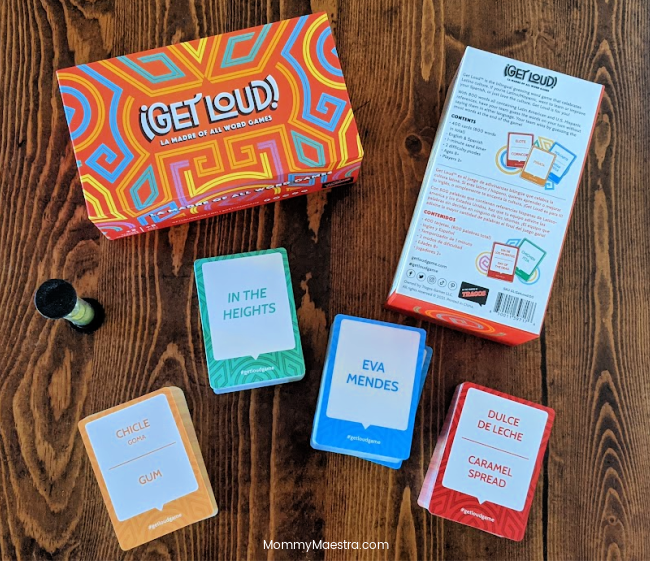
Get Loud! bilingual word guessing game for families


The following post is in collaboration with Tragos. All thoughts and opinions are my own. This post contains affiliate links.

Discover ¡Get Loud! by Tragos Games, a fun, bilingual word game for kids. It's perfect for celebrating Hispanic Heritage Month - or learning at ANY time of the year.

Every year, during Hispanic Heritage Month, I go on the hunt looking for new resources that will help families (including mine!) with learning about about Hispanic culture or that support them in their efforts to raise bilingual kids. This year, Tragos Games stands out!

Get Loud! is their new bilingual guessing word game that is kid-friendly and great for nurturing their knowledge of Spanish AND Hispanic culture. I received a review sample of the game a few weeks ago. It is fabulous for several reasons.


Celebrate Hispanic Heritage Month with !Get Loud!

The Huge Number of Cards


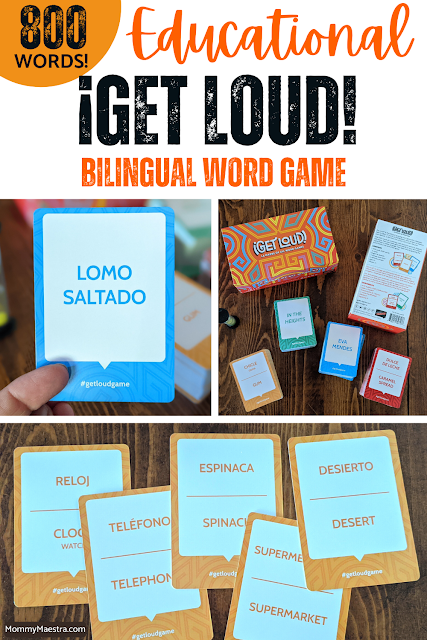
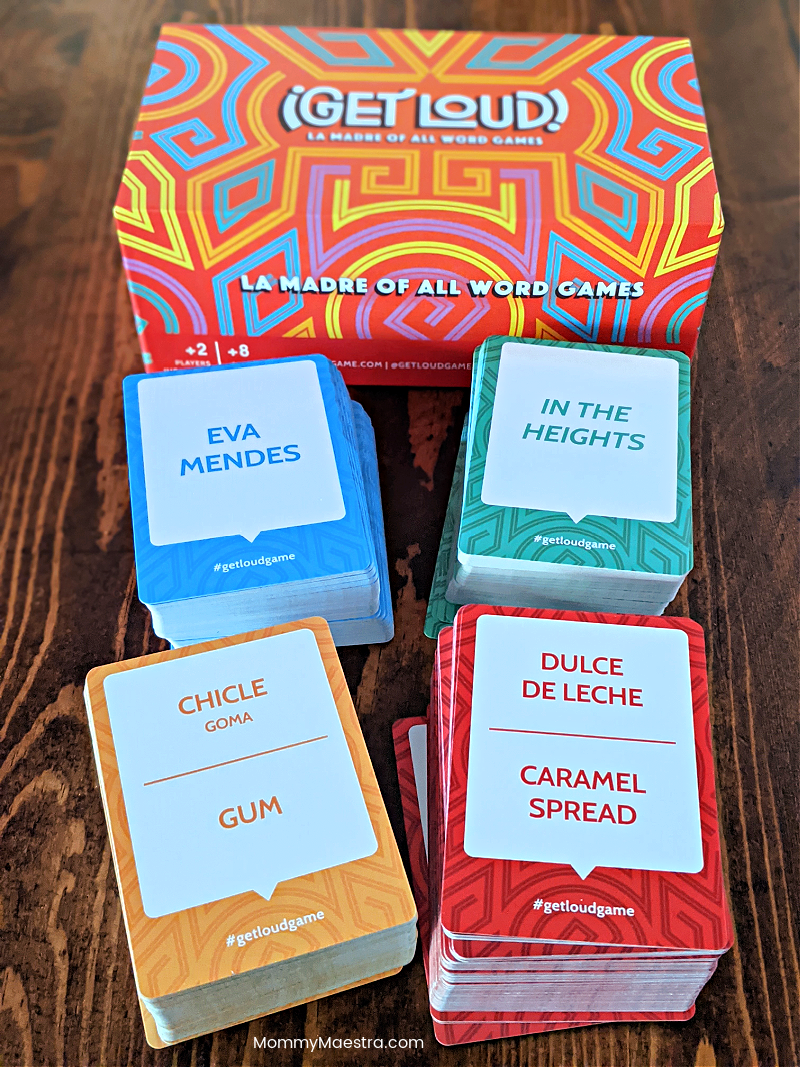
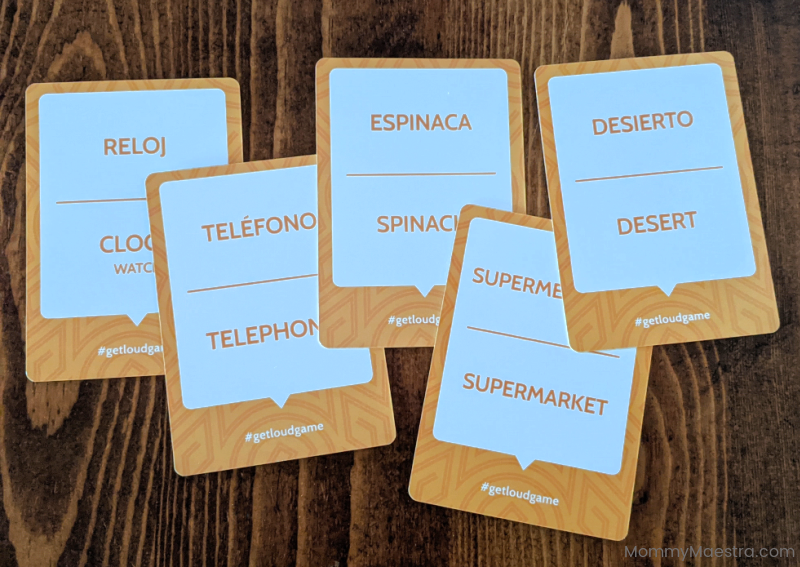
¡Get Loud! has SO MANY cards! There are 400 cards with words on both the front and back in English and Spanish, when necessary. That means 800 words! Wow. I can totally see how this would be an awesome game to play in the classroom and/or at home. These words range from simple everyday words of people, places, and things that your kid will be learning both in and out of school.

A lot of the words are culturally based - in other words, if you aren't familiar with Hispanic culture, then you will probably learn a lot. You may want to keep your phone handy so you can look up what some of them are. And even if you consider yourself pretty knowledgeable, you may still need to look up a few.
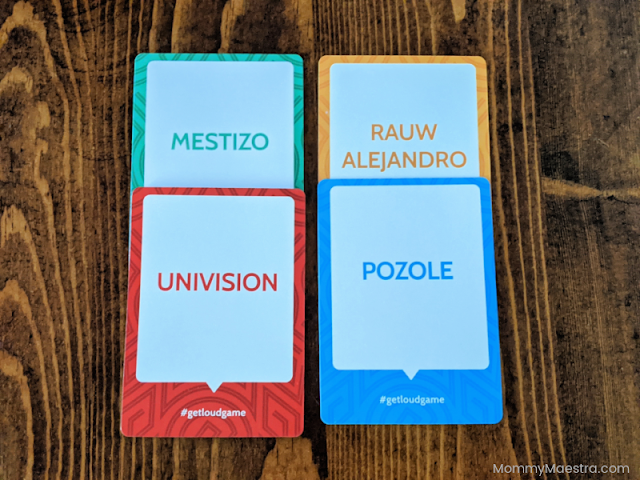
¡Get Loud! word game for Hispanic Heritage Month.

The Diversity

I like the diversity of Hispanic cultures that are represented in this game deck. From Puerto Rico to Colombia to Peru, there are references to foods, people, words, and more.

But the game also comes with different levels of difficulty. The cards are color coded: red and yellow with simpler words and references for younger players, or blue and green for more challenging words that adults are more likely to know. They include topics such as history, travel, and pop culture.

¡Get Loud! word game helps boost Spanish vocabulary.

It's Bilingual!


And I think that the best part of this game is that it can easily be played in either English or Spanish. Many of the words are recognizable or used in both languages. But when necessary, they've listed the word in both languages.

This would be a great way to reinforce new vocabulary if your children (or your entire family) are learning either English or Spanish. 
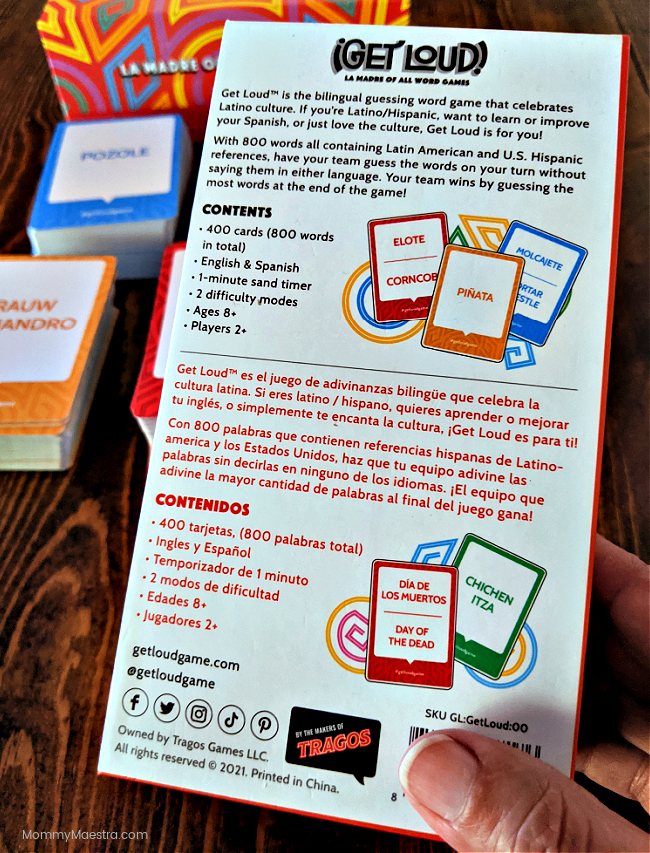
But it's also a great way to learn about Latin America and U.S. Hispanic culture, icons, and more.

It's Kid Friendly!


The packaging says that this games is best for kids ages 8 and up, but really, I think you might even be able to use it with younger children. You may need to be intentional in the cards that you select to play with, but there are certainly PLENTY of options. 

Support your children's bilingualism with the word game, ¡Get Loud!


How to Play


Playing the game is easy!
  1. Choose the colored cards you want to use.

  2. When it is your turn, you flip the minute sand timer and grab a card from the deck. Do your best to describe the word until the other person guesses what it is. 

  3. Get another card from the deck and do the same. 

  4. The team or player with the most cards at the end of three rounds is the winner!
The game defines a round is completed after each player on a team has had a turn. 

I think you can play individually or in teams, but teams is recommended. However, as a parent and teacher, I think you can certainly use this game in a variety of ways.

Get One!


This game is a must-have for all Hispanic families and classrooms. Don't wait! You can order your ¡Get Loud! card game here.

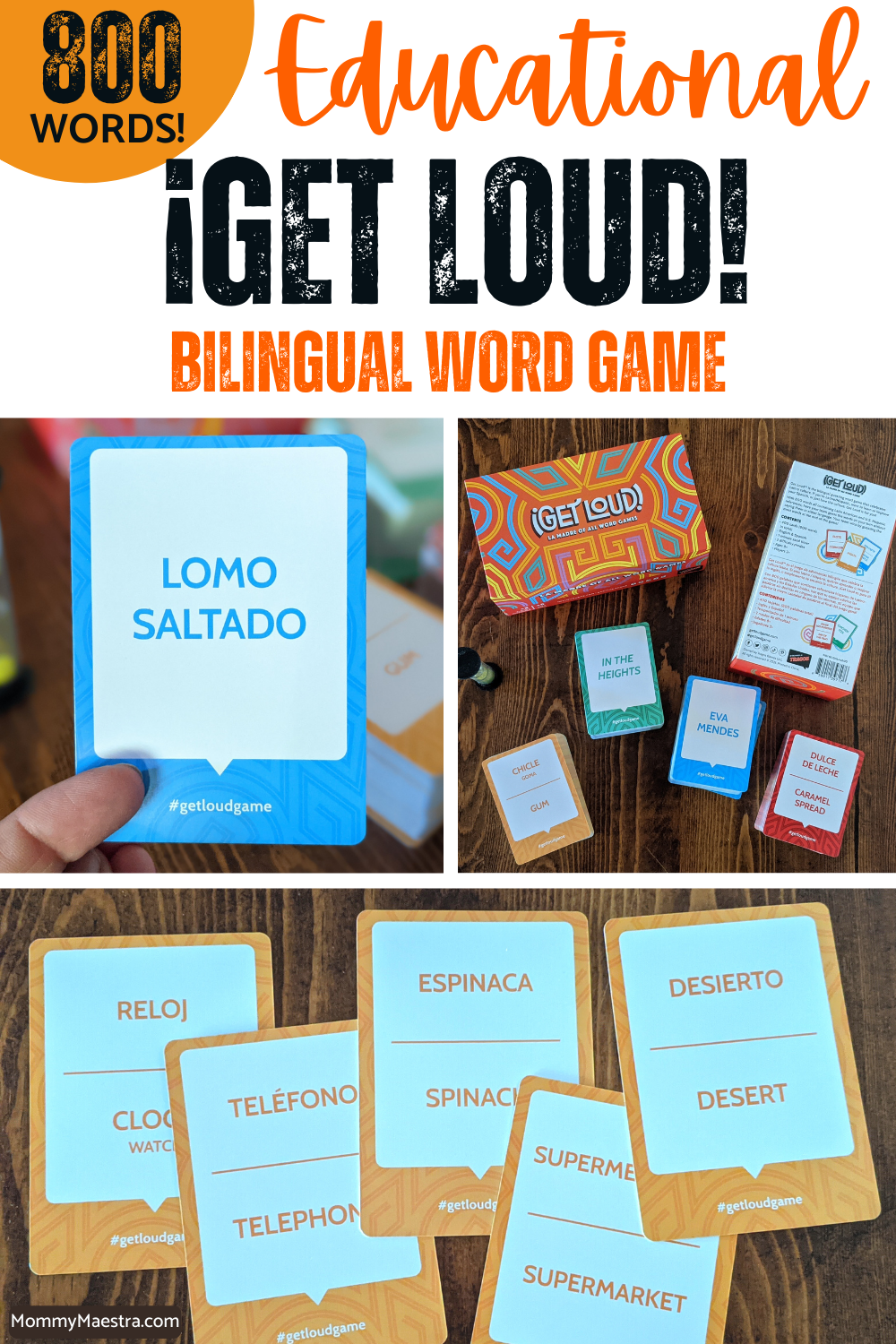
Want to find this post again? Pin it!

Monday, January 30, 2023

Roberto Clemente Lesson Plans, Activities, Coloring Sheets and More

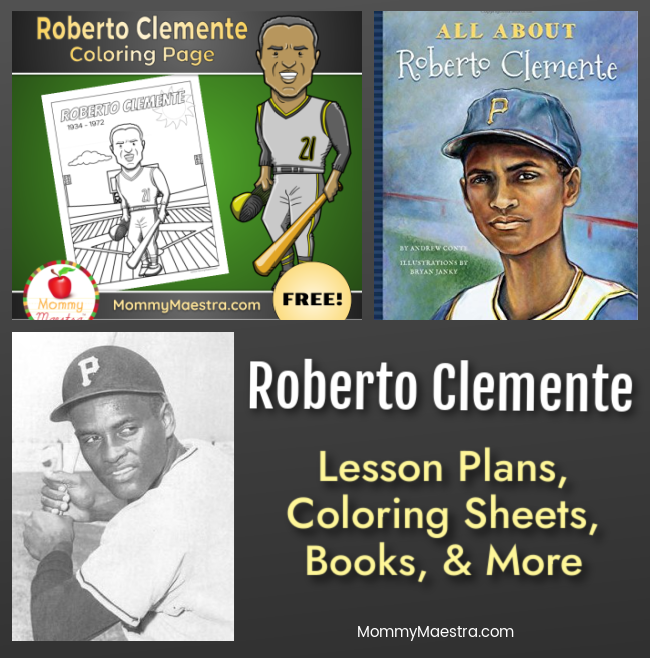
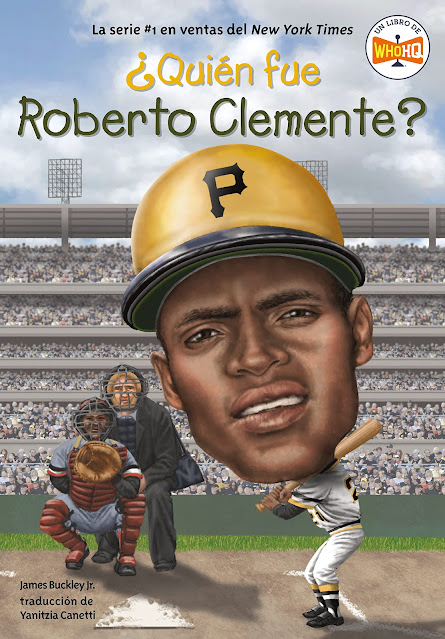
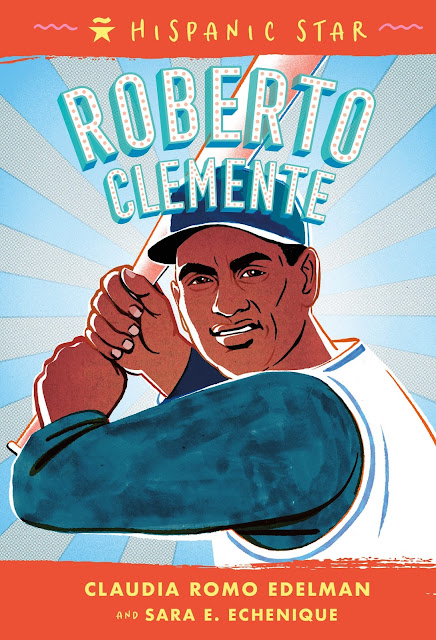
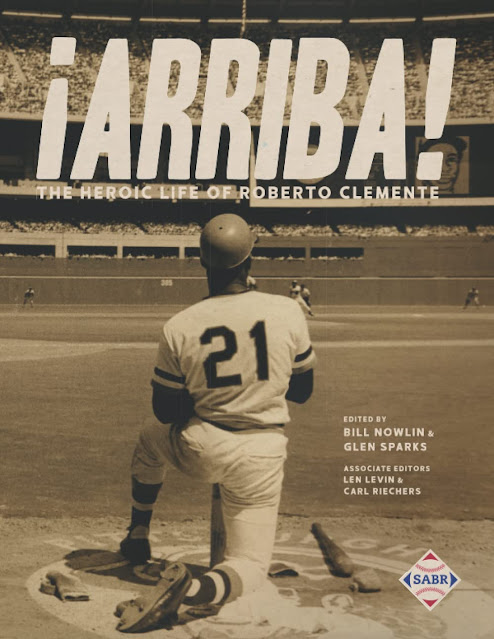
You may have heard about the baseball legend, Roberto Clemente. But did you know that the Puerto Rican was also a great humanitarian? In fact, he was posthumously awarded a Congressional Gold Medal of Honor in 1973 for his philanthropic work. Roberto Clemente was the first Hispanic to achieve greatness in baseball, such as the first Hispanic to be named league MVP and the first Hispanic elected to the Hall of Fame, among other firsts. I hope you enjoy this collection of resources for learning and teaching about Roberto Clemente. Surprisingly, there are less than I expected. I hope that changes in the future.

Then learn about other important Latinos in history that your children should know!

This post contains affiliate links.


Lesson Plans


TpT Resources:


Printables


Coloring Pages


Videos


Here are some great child-friendly videos about the great baseball player, Clemente.


Friday, December 30, 2022

Latin Americans in History

 
I am SO excited to share that my newest book is now available for pre-order! Latin Americans in History: 15 Inspiring Latinas and Latinos You Should Know (aff link) was wonderful to research and write and I hope that you will all run out (or get online) and buy a copy! This book is a collection of biographies written for children ages 8 to 12 years old. It introduces them to a few well-known (and some not so well-known) figures of Latin American heritage in history.

This post contains affiliate links.


Teaching Children a More Complete History

One of the most frustrating things that I've noticed over the years is how true Latin American history has been ignored - or erased? - from history books. The only mention that Latin America typically gets in any history curriculum is by way of the Mesoamerican civilizations and the Spanish "discovery" and conquest/colonization of America.

How many historical figures of Latin American heritage can you actually think of? Maybe you think of Rigoberta Menchú or Simón Bolívar or maybe Benito Juárez? If you are familiar with their names AND their stories, then you should give yourself a pat on the back because you are in the minority.

Latin Americans in History: Biographies for Children


My book was written to introduce children ages 8 to 12 to some of the remarkable men and women of Latin American heritage who have made a difference in their countries and on world history. These 15 inspiring Latinas and Latinos are:

  • José Gervasio Artigas
  • Simón Bolívar
  • María Piedad Castillo de Levi
  • Guillo Pérez
  • Antônio Carlos Jobim
  • Gabriel García Márquez
  • Violeta Barrios Torres de Chamorro
  • Dolores Huerta
  • Rita Moreno
  • Pope Francis
  • Isabel Allende
  • Franklin Chang-Díaz
  • Gloria Estefan
  • Rigoberta Menchú
  • Cecilia Tait
In no way should these be considered the best or the most important figures to learn about. These 15 extraordinary figures barely touch the surface of the many, many noteworthy people who have loved their culture and fought for their people, countries, or traditions. 

The names chosen for profiles in this book were based on their diversity and representation. You will find an artist, musician, novelist, scientist, athlete, activist, suffragist, actor, and a Pope. They come from the U.S. and throughout Latin America, including Uruguay, Ecuador, the Dominican Republic, Venezuela, Colombia, Nicaragua, Argentina, Guatemala, Costa Rica, and Peru.

Perhaps your children will recognize some of these names - or maybe they won't. And that's why I wrote this book. To help them learn, admire, and find confidence. 


And I'd like to give a huge shout out to Kristina Rodriguez, the talented illustrator whose artwork graces the pages of this book. Her beautiful portraits help children visualize the individuals we've highlighted in this biography.


Lesson Plans for Latin Americans in History


My book is available on Amazon - you can order it now! 

I am also making lesson plans for each individual chapter biography. They'll be available over the next few months. I'll update this post with links as they become available.


A Note About Brazil and Tom Jobim


Tom Jobim was a brilliant Brazilian musician. However, if you ask Brazilians or people of Brazilian heritage if they are Latin Americans, you may get different answers. The question of whether or not Brazil is part of Latin America remains controversial because it was a Portuguese colony, not a Spanish one. Therefore, it has a different history than its neighboring countries. However, in the spirit of inclusivity, Brazil has been included in this book. Just keep this question in mind as you read about Tom Jobim. 


Other Posts You May Enjoy


Don't forget to subscribe to my newsletter!


Thursday, December 22, 2022

5 Gifts to Empower Young Latinas

When I look for gifts for my kids, I try to find gifts that have meaning and value. So I wanted to put together a short list of some remarkable products that will empower young Latinas that you may be raising.

This post contains affiliate links.


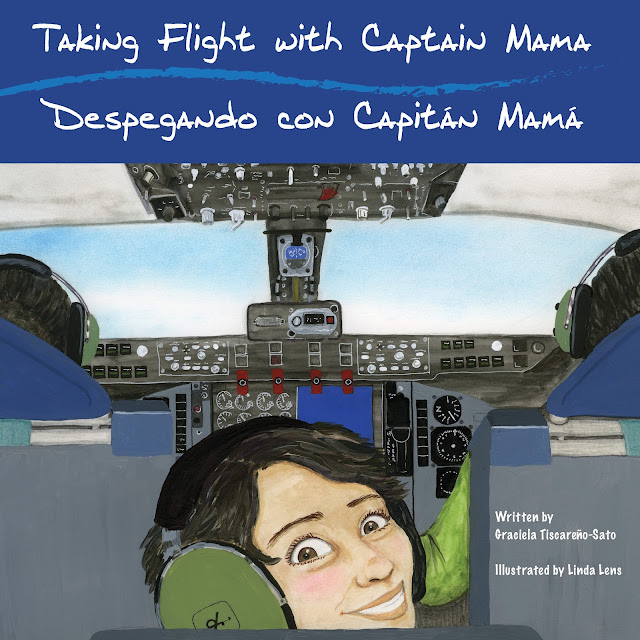
Taking Flight With Captain Mama / Despegando Con Capitán Mamá

Taking Flight With Captain Mama / Despegando Con Capitán Mamá
by Graciela Tiscareño-Sato

This is the third book in the award-winning, bilingual, Captain Mama aviation series. I've written about the Captain Mama series before, so check out the reviews. In this story, Marco narrates as he and his classmates take flight on the KC-135R aerial refueling tanker during a class field trip. The students and teachers receive a pre-mission briefing and watch what each crewmember does to get the flying gas station ready to fly. In the air, they see the aircrew in action refueling some of the coolest jets in the U.S. Air Force and witness what happens when an emergency suddenly arises in flight! The book includes an original, bilingual origami jet project, bilingual glossaries and bilingual educational resources.


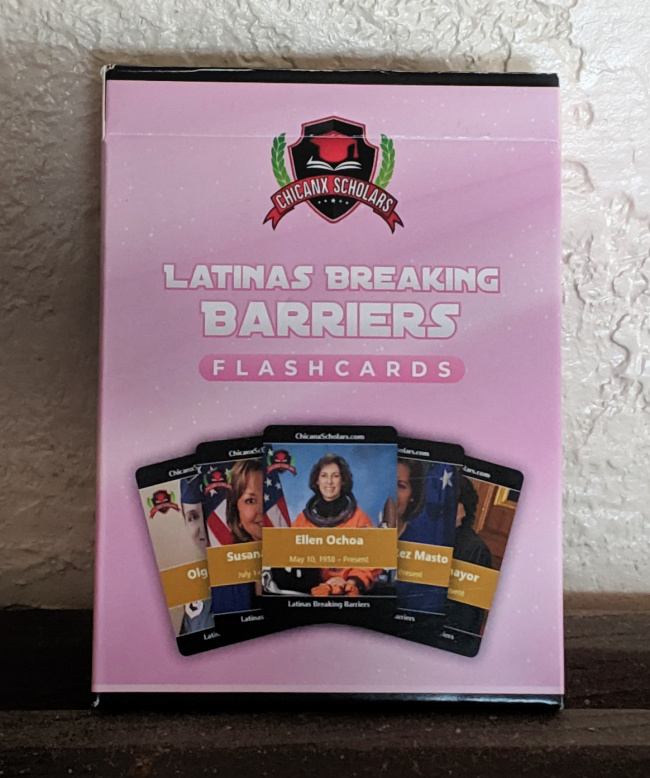
Latinas Breaking Barriers Flashcards


Latinas Breaking Barriers Flashcards
from Chicanx Scholars

50+ educational cards introducing the reader to strong Latina women who have defied the odds and overcome barriers of gender, race, class, and culture to become recognized leaders and role models all around the world in their respective fields.

Filled with colorful images and historical fun facts our youth are provided with the perfect opportunity to embrace their heritage, engage in meaningful dialogue about our past, and learn about the sacrifices prior generations have made.


HerStory Board Game
from Underdog Games

The premise of this game is that you’re an acclaimed author, writing a book to tell the stories of remarkable women in history. Discover iconic historical women as you do research, draft chapters, and complete the highest scoring book to win!120 HISTORIC WOMEN FEATURED: From Joan of Arc to Malala, HerStory includes historical legends and modern favorites. I have this game and it is amazing in both design and quality.


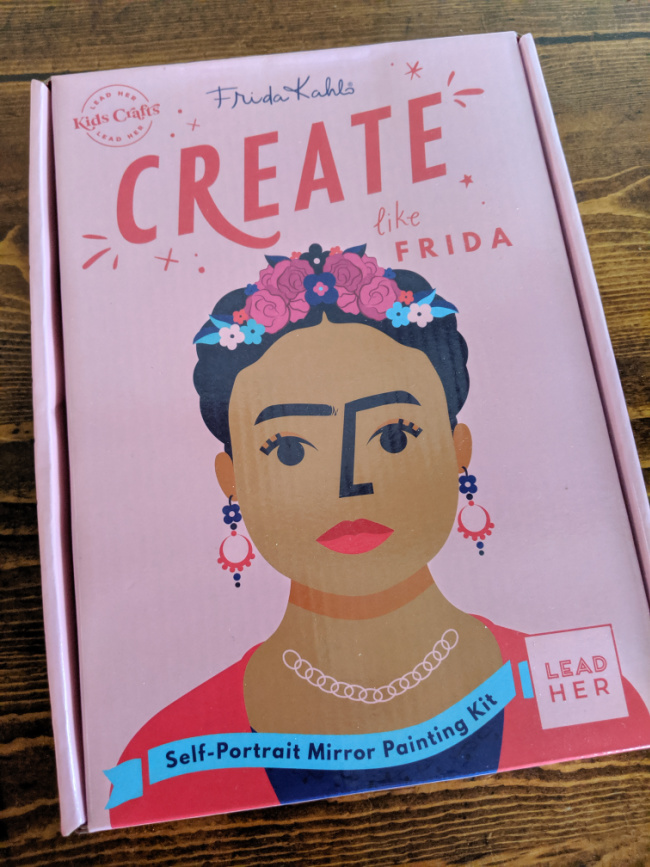
Create like Frida Self-Portrait Mirror Painting Kit


Create like Frida Self-Portrait Mirror Painting Kit
from KidsCrafts.org

Kids Crafts has a line of craft kits that feature remarkable trailblazing women in history, such as this one highlighting Frida Kahlo. Other kits include journaling, weaving, needle arts, and more to represent women such as Maya Angelou, Maria Montessori, and others.


Latin Americans in History: 15 Inspiring Latinas and Latinos You Should Know

by Monica Olivera (me!)

Discover the incredible contributions that people of Latin American heritage have made to world history! From politicians and physicists to poets and painters, these biographies for kids explore 15 incredible Latin American people who used their creativity, intelligence, and strong beliefs to improve the world around them.

  • Detailed biographies—Dive deep with stories that cover each person’s entire life, including their childhood, their accomplishments, and the challenges that they faced.
  • Learning and growing—These impressive people will inspire kids to discover their own talents and use them to achieve their dreams and support their community.
  • Beyond the book—Want to learn more? Each biography includes activity ideas and suggestions for further reading so kids can keep exploring.


Other Posts You May Enjoy:


Monday, September 19, 2022

Flashcards on Hispanic Figures & Events in History

Flashcards on Hispanic Figures & Events in History
The following is a sponsored post in collaboration with Chicanx Scholars. All thoughts and opinions are my own.

One of my favorite things about Hispanic Heritage Month is learning about (and sharing!) remarkable resources that help our kids learn about the contributions of Latin Americans in world and U.S. history. This line of flashcards from Chicanx Scholars is a prime example! And what makes them even better is that the company was started by parents who reflected on their own school experiences, recognized something was lacking, and did something to change it for future generations. 

This post contains affiliate links.


Flashcards Featuring Hispanics in History


There is a growing number of children's books that highlight the Hispanic experience. But finding other materials continues to be a challenge. I appreciate it when people realize the value of creating and using other types of learning tools, because not all children learn the same way, nor are they all avid readers. Some kids prefer to learn through activity-based projects. 

These flashcards provide a way to supplement books and worksheets when teaching about Hispanic Heritage Month. And there are three different sets from which you may choose.

Flashcards on Hispanic Figures & Events in History


The History of Mexico Flashcards


While all of the decks that are available are excellent, this is probably the best set, in my opinion. Why? Because it is really hard to find ANY resources in English that are about the history of Mexico...and geared for children.

I've seen several parents asking for materials on Mexican history and historical figures in my Facebook group for Hispanic & Bilingual Homeschoolers. And each time, it has been a real struggle to find resources to recommend. Not anymore! This flashcard set will be at the top of my list. 

This set of 52 cards covers people and events from the Olmecs to the Mexico City Earthquake, and Benito Juarez to the Battle of Zacatecas. I would use this as a spine for studying Mexican history and select a card, then research the topic of the card more in-depth (or have your student do so). 

Each card comes with an image and the name on the front, and a bullet-point list of key facts on the back. Most of the cards also have a date on the front, but a few don't because dates aren't applicable. It's obvious that a lot of work has gone into researching each cart topic. I give this deck an A++ rating. :)

Flashcards on Hispanic Figures & Events in History


The Chicano Movement Flashcards


These flashcards take an in-depth look at the Chicano Civil Rights Movement. It includes, of course, Cesar Chávez and Dolores Huerta, but it also highlights many little known leaders of the movement, whose work made a national impact. Quieter figures such as Helen Fabela Chávez (Cesar's wife), Jessie de la Cruz, Emma Tenayuca, and Rodolfo Acuña are featured. (Don't know them? Look them up!!)

But there are also a lot of important moments in the Chicano movement that are included. This is especially important because too often historical events are often overlooked by (non-Latino) historians or those creating curricula.

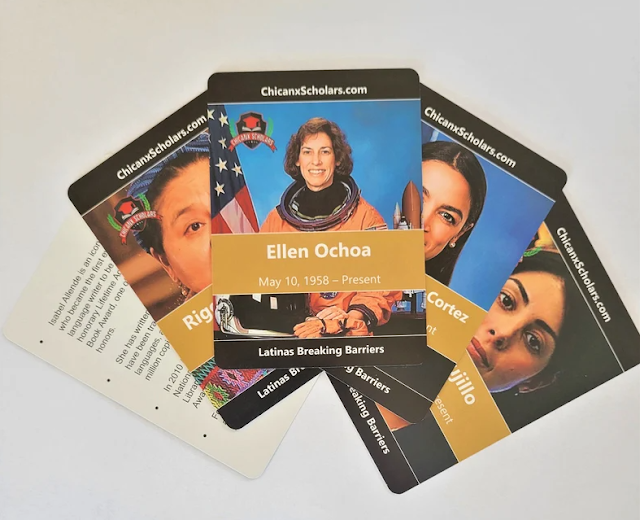
Latinas Breaking Barriers Flashcards


This, of course, is always a popular topic. Latinas love stories or resources that highlight the achievement of other Latinas. We already know how tough we are. But we want the world to know it, too. And when we see these stories being written down and handed down, there's an orgullo that we ALL feel. Because we know these women; they are our mothers, our grandmothers, our tías, and primas. 

I looked through this one curious to see if there would be anyone listed that I didn't recognize and I was happy to see quite a few of them. Many of them are from California - which is where the Chicanx founder, Danny, is from. If you are from California, you may find this to be especially interesting. But either way, what a great way to introduce new Latina faces and their accomplishments. 


Flashcards on Hispanic Figures & Events in History

How to Use Them


There are a few different ways to use these flashcards. As I mentioned earlier, the main way I would use them is as a spine for a class on Mexican studies, Mexican-American Civil Rights, or Latina studies. 

Students can memorize the names and accomplishments of each person, place, or event. They can also choose a card from the deck and do more thorough research or a presentation on the topic. (The picture above is one of the graphic organizers from my Historical Figure & Event Study Pages set.)

The decks may also be used as a trivia game to assess your child's knowledge of the subject. 

Or you can simply use them as conversation starters for your class or family.


What I Like


I find these cards to be a fabulous resource for parents regardless of whether or not they are homeschooling, as well as educators. I could easily create a homeschool course for my teen on any of the three topics covered by these flashcards. The figures and events on each card present the perfect jumping off point for more in-depth study and all together would be a great way for parents to supplement their children's history education. 

It's important to note, however, that the focus is primarily on Mexican/Mexican American figures and events. If that's what you're looking for, then these sets are for you! That said, the Latinas Breaking Barriers set does take a broader look and includes international figures such as Guatemala's Rigoberta Menchu, Chile's Michelle Bachelet, Puertorriqueña Dr. Antonia Novello, and several others.


Buy Them Today!


Visit the Chicanx Scholars shop on Etsy and take a look at their card decks for sale. Or, if you know exactly which one you want, you can click on these links to take you there:

Mexican History Flashcards


Latinas Breaking Barriers

Latinas Breaking Barriers


Want to find this post again? Pin it!

Flashcards on Hispanic Figures & Events in History


Other Posts That You May Enjoy


Thursday, September 1, 2022

Jovita Idár Lesson Plan

image source: U.S. Mint

After more than three quarters of a century, Jovita Idár is in the news again. Only this time, she is the subject, not the writer. Jovita will be one of five women recognized by the U.S. Mint in the 2023 American Women Quarters Program. (Learn about the other four women.) Her image will be found on a U.S. quarter. Maybe you've never heard of Jovita Idár. If not, continue reading to learn about this fierce, intelligent, and compassionate role model we have in our history. Scroll down to find my printable lesson plan. To learn about other remarkable figures, check out my post on Latinos in History Your Children Should Know.

This post contains affiliate links.

Who was Jovita Idár?

Jovita Idár was born in the border town of Laredo, Texas, in 1885. Jovita’s family was one of the few middle class Mexican families. Passionate about education and civil rights, Jovita’s father, Nicasio Idár raised his kids to be highly educated and with a strong sense of social justice. 

The second of eight children, Jovita excelled academically. It’s no surprise that she started off as a teacher. But she became frustrated with the lack of resources available to Mexican students and the one-sided curriculum that omitted or demonized Mexican figures and culture. She understood the lasting damage this did to Mexican children who learned that being white was good and being brown was bad. Before long, she decided that she would be more effective at creating social change as a journalist fighting for equal education and the civil rights of Mexican families. She began working for La Crónica, her family’s newspaper. Nicasio was proud of his daughter’s outspoken character and encouraged her interest and involvement in politics.

In her weekly articles, Jovita protested the racist, anti-Mexican culture that permeated not just her border town, but also throughout Texas and the Southwest. Signs refusing service to “Mexicans and dogs” were often hung in storefronts. Segregation was strong. And voter intimidation - frequently through violent killing and mutilations - was common. 

It’s important to note that Jovita did not restrict her articles to her father’s paper. She frequently wrote for other Spanish-language newspapers throughout her life, oftentimes under pseudonyms, such as “Ave Negra” (Black Bird) and “Astrea” (the Greek goddess of justice).


Jovita Idár and members of Union of Stone Mason and Bricklayers, Laredo, Texas, ca. 1915,
General Photograph Collection, UTSA Special Collections.


The First Mexican Congress

In 1911, Jovita and her family organized the First Mexican Congress - El Primer Congreso Mexicanista - in response to the lynching of a 14-year-old boy. The goal was to find solutions to the inequalities and racism that existed for Mexicans and Mexican Americans. It also strove to unite Mexicans on the issues they faced and create a unified front to fight for their rights and better living conditions. 

The event had a huge turnout with officials and citizens from both Mexico and Texas attending. It is regarded as one of the largest Mexican-American civil rights gatherings of the time.

Unsurprisingly, Jovita ensured that women were central to the event and not only helped to organize it, but were speakers, too.

The League of Mexican Women & the White Cross

Shortly afterward, Jovita also founded La Liga Femenil Mexicanista (the League of Mexican Women), which she modeled after the Mexican Congress. It’s goals were to engage and empower Mexican women, support women’s suffrage, teach adult literacy classes, and champion quality education for Mexican children. She served as its first president and their first project was providing free bilingual education to Mexican children from poor families. Its members were highly educated women and mostly working class who learned about politics so they could improve conditions in their communities.

Jovita saw the fluidity of living in a border town and sought to rally families on both sides of the border. Fully bilingual, she understood that the success of Mexican families required change in both countries. She left her journalism behind and served in the White Cross (founded by her best friend Leonor Villegas de Magnon) when the Mexican Revolution made its way across the Texas border in 1914. 

A couple of years later, Jovita was able to hang up her nurses’ uniform and return to her love of journalism when she began writing for El Progreso newspaper. After the paper ran an editorial criticizing President Woodrow Wilson's order to dispatch U.S military troops to the Mexico–United States border, Texas Rangers showed up at the newspaper, armed and ready to close it down. But Jovita herself barred entry and refused to let them enter while boldly quoting their First Amendment rights to freedom of the press. (They returned the next day when she was gone and smashed the printing press to bits.)

The First Latina Newspaper Owner

Two years later, in 1916, Jovita purchased her own printing press and started her own Spanish-language newspaper called La Evolución in which she continued to expose the discrimination Mexicans experienced. It was probably the first Latina-owned newspaper in the United States.

Wedding portrait of Bartolo Juarez and Jovita Idar, 
General Photograph Collection, UTSA Special Collections.

Five years later, Jovita’s brother, Eduardo, took over the running of the paper when Jovita moved to San Antonio with her husband, Bartolo Juárez. But Jovita didn’t stop her crusade for social justice. Together, they founded the Democrat club. And they quickly became leaders in the community. As such, Jovita embraced civic engagement and gave back to her community by founding a free kindergarten, volunteering as an interpreter at the local hospital, and assisting undocumented workers in getting their naturalization papers.

Jovita Idár Juárez died in San Antonio from tuberculosis on June 3, 1946.

She was fierce and intelligent and compassionate. What a wonderful role model we have in our history. 


Get the Lesson Plan


If you're looking for a lesson plan to share Jovita Idár's story with your older children, consider Lesson 1: Hispanic Activist Jovita Idár from Unit 1 of my curriculum, A More Complete History. 

This 30-page lesson plan is part of my comprehensive Teach for Justice unit that focuses on five important (and often forgotten) historical figures of the 1900s using articles and mini documentaries as our secondary sources. In this packet for high school students, you'll find lesson plans for in-person and virtual learning, as well as:
  • essay questions,
  • project based learning options,
  • and research & present topics.

It includes Google Drive options for worksheets and summative assessments allow for differentiated learning and virtual instruction. Answer keys and essay rubric are included.

Other Resources You May Enjoy


Wednesday, September 15, 2021

5 Picture Books Featuring Legends and Folktales from Latin America

Happy Hispanic Heritage Month! 

As I mentioned in my last post, this is one of my favorite times of year for finding new resources that I can use to explore our Hispanic heritage throughout the year. 

Today, I want to start with resources for little ones. So I'm sharing a list of five picture books that feature myths and folktales from five different countries in Latin America. What a great way to introduce culture to young minds! 

Enjoy!

This following are Amazon affiliate links. See my sidebar for more information.

Mexico:

Feathered Serpent and the Five Suns: A Mesoamerican Creation Myth

by Duncan Tonatiuh

Long ago, the gods of Mesoamerica set out to create humans. They tried many times during each sun, or age. When all their attempts failed and the gods grew tired, only one did not give up: Quetzalcóatl—the Feathered Serpent. To continue, he first had to retrieve the sacred bones of creation guarded by Mictlantecuhtli, lord of the underworld. Gathering his staff, shield, cloak, and shell ornament for good luck, Feathered Serpent embarked on the dangerous quest to create humankind.


Peru:

Kutu the Tiny Inca Princess / La Ñusta Diminuta

by Mariana Llanos

In this bilingual book, written in English, Spanish, and bits of Quechua, we'll meet Ch'illik'utu (Kutu), a princess the size of a cob of maize. When a terrible drought devastate the city of Cusco, where she lives, Kutu sets out on a courageous quest to save her people.


Puerto Rico:

Taíno Tales: The Secret of the Hummingbird

by Vicky Weber 

Alida, the daughter of a Taíno chief, lives in paradise. One day, she is startled by a boy from the opposing tribe, the Carib. Meeting daily in a hidden place, Alida and the boy, Taroo, soon become friends ー and then their friendship blossoms into something more. What will happen if someone discovers their forbidden love? A retelling of the Taíno legend of how the hummingbird came to be, this story brings an ancient culture ー and a young love ー to colorful life.


Argentina:

Animal Poems of the Iguazú / Animalario del Iguazú

by Francisco Alarcón

In the magical rainforest of the Iguazú National Park, butterflies are the multicolored flowers of the air. Great dusky swifts watch over the park, and the untamed spirits of jaguars roam the jungle. Spanning three countries--Argentina, Brazil, and Paraguay--the thundering waterfalls and lush green rainforests of the Iguazú have dazzled visitors for centuries, and are now in danger of being lost.


Cuba:


Martina the Beautiful Cockroach: A Cuban Folktale

by Carmen Agra Deedy

The beautiful Martina Josefina Catalina Cucaracha doesn’t know coffee beans about love and marriage, so when suitors come calling, what is she to do? Luckily, she has her Cuban family to help!

While some of the Cucarachas offer Martina gifts to make her more attractive, only Abuela, her grandmother, gives her some useful advice: spill coffee on his shoes to see how he handles anger. At first, Martina is skeptical of her Abuela’s suggestion, but when suitor after suitor fails the Coffee Test, she wonders if a little green cockroach can ever find true love.


Other Posts You May Enjoy


Monday, May 24, 2021

Exploring Primary Sources Website


For those of you with older children who are studying civics, I wanted to be sure to share with you the new site from iCivics. 

Exploring Primary Sources gives educators free, high-quality primary source teaching tools. And it allows students to research and examine primary resources directly rather than reading textbook accounts or narratives. 

This site gives students a chance to:
  • Discover innovative, free products from iCivics and their partners that offer interactive, engaging learning experiences with primary sources
  • Build their knowledge, skills and confidence to teach with primary sources with this collection of professional development videos
  • Simplify lesson planning with this curated collection of high-quality primary source tools
This site is really important for teachers and students in middle school and high school. But there are sections dedicated to students in K through 5th.


The cool thing is that the materials and lessons appear to be presented in an engaging format using games and other interactives to teach kids.

AP teachers (homeschool & traditional) should especially find this site of interest because there is a tool devoted to DBQs (Document Based Questions), which are part of AP U.S. History exams. The tool takes students through these 4 steps:
  1. Rate the document for usefulness and determine perspective.
  2. Identify and analyze the text and visual elements that assist with answering the questions.
  3. Address the supporting questions in your own words.
  4. Summarize your findings as a response to the Big Question.
I love this resource because as the mother of a rising sophomore, this is a tool that I can use in our civics and history lessons for the next three years. 

And the fact that this is published by iCivics (who I've been using for a couple of years now) has my complete trust.

This whole site is packed full of teaching resources. I encourage you to go and check out the new Primary Sources website for yourself.

Thursday, March 25, 2021

National Spanish Paella Day

Paella. © Can Stock Photo / Alex9500

Did you know that this Saturday - March 27th - is National Spanish Paella Day?

I have a profound love of paella. It comes from my dad's side of the family. As a child, when I would visit Spain, paella became one of my favorite dishes. I associate the flavor with beautiful memories. 

So in honor of National Spanish Paella Day, I wanted to share a little bit of the history of this iconic dish.

Paella is a Spanish rice dish. Together with gazpacho, it is probably considered the national dish by many outside of the country. But this meal finds its roots in eastern Spain, and Spaniards all recognize it as being the official dish of Valencia. This city is of great importance to Spain due to its economic impact on the country. The Port of Valencia is the fifth busiest seaport in Europe and the busiest port in the Mediterranean. It employs 15,000 people who service more than 7,500 ships annually. All of this is important because of the trade goods that are imported (and exported) through this port. And one of those is saffron (more about that below).

Valencia is also Spain's leading rice producer. It was introduced to Spain by the Moors in 711. In fact, rice in Spanish is called "arroz" a word that finds its roots in Arabic ('arz), rather than Latin.

Paella cooking over an open fire. Jan Harenburg, CC BY 4.0, via Wikimedia Commons

Originally, paella was a laborer's dish. Those who worked the rice fields cooked it in a wide pan over an open fire. These farmers would add whatever meats and vegetables they had available. The true original paella recipe used chicken or rabbit meat. Today, however, paella sprinkled with seafood - especially shrimp, octopus, and clams - is popular throughout the country.

The name paella itself is believed to come from the Valencian word for the unique shallow pan in which it is cooked. But there are many other lovely legends about where the dish got its name. (Challenge your kids to research it!)

Recipes are plentiful throughout Spain, but there are two main ingredients that identify it as being paella: the rice (of course) and saffron, the spice that gives it that unique yellow/golden appearance. In addition to chicken, rabbit, and seafood, other meats include sausage, and even duck. The chef may even go to great lengths to artfully arrange the dish before serving. Check out this example: 

Seafood paella. Image by Manuel Martín Vicente, CC BY 2.0, via Wikimedia Commons

Since its beginning, however, this dish has been traditionally cooked and served outside, especially for large (family) gatherings. 

Such a fantastic dish. Here are links to some fabulous recipes online:

And if you'd like to use this mini lesson with your own students or children, check out my one-page reading passage! You can find it here in my TpT store.


Are you going to try one of the recipes linked to above? You may want to get this equipment, too!


You may also like:

LinkWithin

Related Posts Plugin for WordPress, Blogger...