Showing posts with label Inspiring Latinos. Show all posts

Monday, January 30, 2023

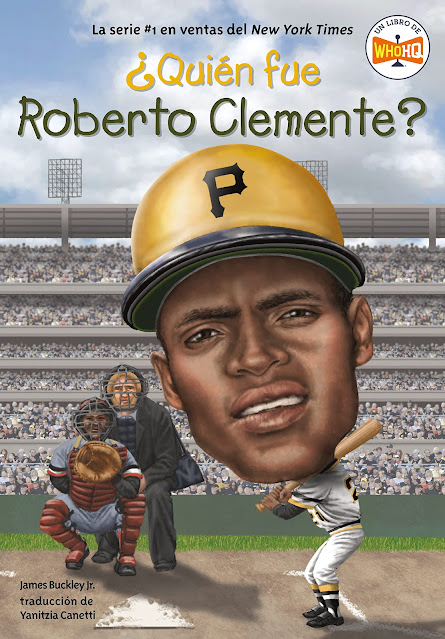
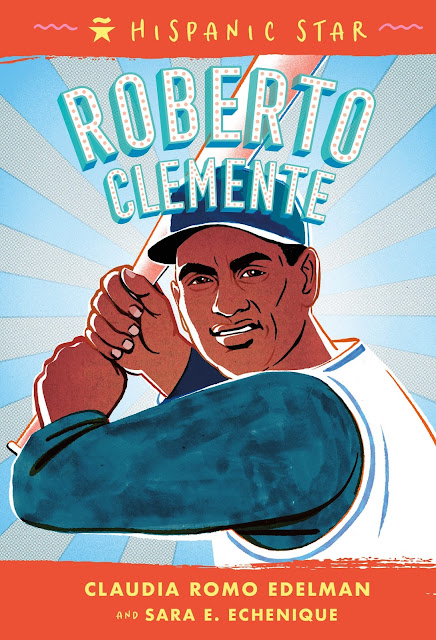
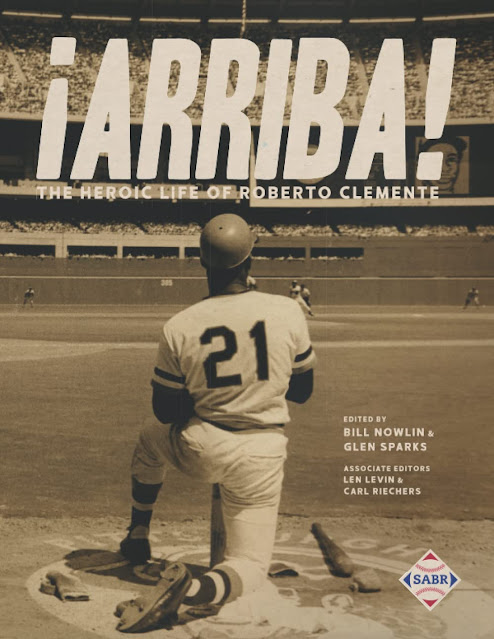
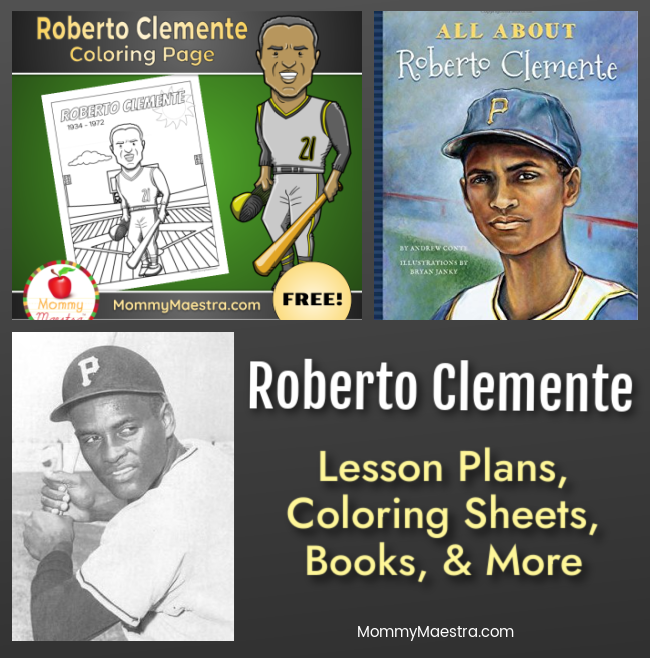
Roberto Clemente Lesson Plans, Activities, Coloring Sheets and More

You may have heard about the baseball legend, Roberto Clemente. But did you know that the Puerto Rican was also a great humanitarian? In fact, he was posthumously awarded a Congressional Gold Medal of Honor in 1973 for his philanthropic work. Roberto Clemente was the first Hispanic to achieve greatness in baseball, such as the first Hispanic to be named league MVP and the first Hispanic elected to the Hall of Fame, among other firsts. I hope you enjoy this collection of resources for learning and teaching about Roberto Clemente. Surprisingly, there are less than I expected. I hope that changes in the future.

Then learn about other important Latinos in history that your children should know!

This post contains affiliate links.


Lesson Plans


TpT Resources:


Printables


Coloring Pages


Videos


Here are some great child-friendly videos about the great baseball player, Clemente.


Friday, December 30, 2022

Latin Americans in History

 
I am SO excited to share that my newest book is now available for pre-order! Latin Americans in History: 15 Inspiring Latinas and Latinos You Should Know (aff link) was wonderful to research and write and I hope that you will all run out (or get online) and buy a copy! This book is a collection of biographies written for children ages 8 to 12 years old. It introduces them to a few well-known (and some not so well-known) figures of Latin American heritage in history.

This post contains affiliate links.


Teaching Children a More Complete History

One of the most frustrating things that I've noticed over the years is how true Latin American history has been ignored - or erased? - from history books. The only mention that Latin America typically gets in any history curriculum is by way of the Mesoamerican civilizations and the Spanish "discovery" and conquest/colonization of America.

How many historical figures of Latin American heritage can you actually think of? Maybe you think of Rigoberta Menchú or Simón Bolívar or maybe Benito Juárez? If you are familiar with their names AND their stories, then you should give yourself a pat on the back because you are in the minority.

Latin Americans in History: Biographies for Children


My book was written to introduce children ages 8 to 12 to some of the remarkable men and women of Latin American heritage who have made a difference in their countries and on world history. These 15 inspiring Latinas and Latinos are:

  • José Gervasio Artigas
  • Simón Bolívar
  • María Piedad Castillo de Levi
  • Guillo Pérez
  • Antônio Carlos Jobim
  • Gabriel García Márquez
  • Violeta Barrios Torres de Chamorro
  • Dolores Huerta
  • Rita Moreno
  • Pope Francis
  • Isabel Allende
  • Franklin Chang-Díaz
  • Gloria Estefan
  • Rigoberta Menchú
  • Cecilia Tait
In no way should these be considered the best or the most important figures to learn about. These 15 extraordinary figures barely touch the surface of the many, many noteworthy people who have loved their culture and fought for their people, countries, or traditions. 

The names chosen for profiles in this book were based on their diversity and representation. You will find an artist, musician, novelist, scientist, athlete, activist, suffragist, actor, and a Pope. They come from the U.S. and throughout Latin America, including Uruguay, Ecuador, the Dominican Republic, Venezuela, Colombia, Nicaragua, Argentina, Guatemala, Costa Rica, and Peru.

Perhaps your children will recognize some of these names - or maybe they won't. And that's why I wrote this book. To help them learn, admire, and find confidence. 


And I'd like to give a huge shout out to Kristina Rodriguez, the talented illustrator whose artwork graces the pages of this book. Her beautiful portraits help children visualize the individuals we've highlighted in this biography.


Lesson Plans for Latin Americans in History


My book is available on Amazon - you can order it now! 

I am also making lesson plans for each individual chapter biography. They'll be available over the next few months. I'll update this post with links as they become available.


A Note About Brazil and Tom Jobim


Tom Jobim was a brilliant Brazilian musician. However, if you ask Brazilians or people of Brazilian heritage if they are Latin Americans, you may get different answers. The question of whether or not Brazil is part of Latin America remains controversial because it was a Portuguese colony, not a Spanish one. Therefore, it has a different history than its neighboring countries. However, in the spirit of inclusivity, Brazil has been included in this book. Just keep this question in mind as you read about Tom Jobim. 


Other Posts You May Enjoy


Don't forget to subscribe to my newsletter!


Sunday, October 2, 2022

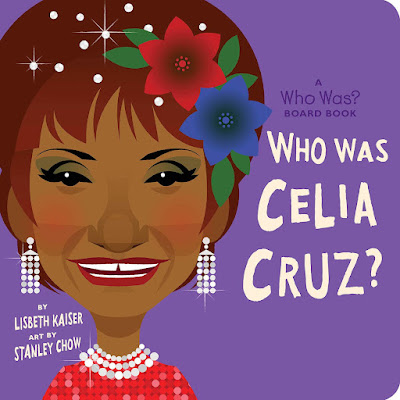
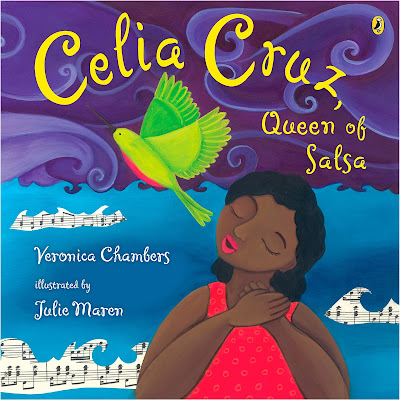
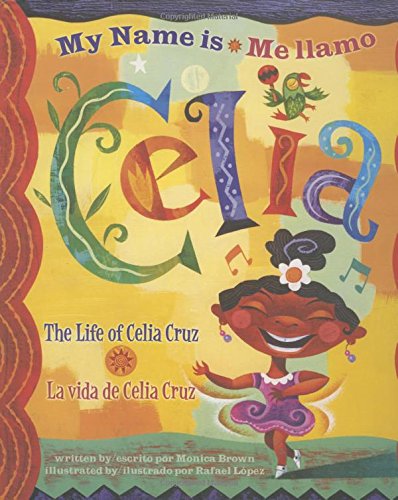
Celia Cruz Lesson Plans, Coloring Pages, Crafts, Activities and More


Did you know that the Cuban "Queen of Salsa" Celia Cruz, originally studied to become a literature teacher? But she interrupted her studies to pursue singing opportunities that eventually led to stardom. She has become beloved by generations all over the world for her operatic voice, flamboyant costumes and intimate relation to the music of Salsa. I've listed resources available for educators and parents below. If you want to learn about other important figures, check out my post on Latinos in History Your Children Should Know.

This post contains affiliate links.


Lesson Plans for Celia Cruz


Elementary Lessons


Resources for Middle & High School


Kid-Friendly Videos for Celia Cruz


Here's my favorite biography video for kids of any age from Cultura Colectiva Plus: The History Machine: Celia Cruz


Read Alouds


Here are a couple of video read alouds of two different children's biographies about Celia Cruz.


Activities & Crafts


Books


by Lisbeth Kaiser

It's also available in Spanish:
¿Quién fue Celia Cruz?: ¿Quién fue? Un libro de cartón


by Veronica Chambers


by Monica Brown


Other Posts You May Enjoy


Monday, September 19, 2022

Flashcards on Hispanic Figures & Events in History

Flashcards on Hispanic Figures & Events in History
The following is a sponsored post in collaboration with Chicanx Scholars. All thoughts and opinions are my own.

One of my favorite things about Hispanic Heritage Month is learning about (and sharing!) remarkable resources that help our kids learn about the contributions of Latin Americans in world and U.S. history. This line of flashcards from Chicanx Scholars is a prime example! And what makes them even better is that the company was started by parents who reflected on their own school experiences, recognized something was lacking, and did something to change it for future generations. 

This post contains affiliate links.


Flashcards Featuring Hispanics in History


There is a growing number of children's books that highlight the Hispanic experience. But finding other materials continues to be a challenge. I appreciate it when people realize the value of creating and using other types of learning tools, because not all children learn the same way, nor are they all avid readers. Some kids prefer to learn through activity-based projects. 

These flashcards provide a way to supplement books and worksheets when teaching about Hispanic Heritage Month. And there are three different sets from which you may choose.

Flashcards on Hispanic Figures & Events in History


The History of Mexico Flashcards


While all of the decks that are available are excellent, this is probably the best set, in my opinion. Why? Because it is really hard to find ANY resources in English that are about the history of Mexico...and geared for children.

I've seen several parents asking for materials on Mexican history and historical figures in my Facebook group for Hispanic & Bilingual Homeschoolers. And each time, it has been a real struggle to find resources to recommend. Not anymore! This flashcard set will be at the top of my list. 

This set of 52 cards covers people and events from the Olmecs to the Mexico City Earthquake, and Benito Juarez to the Battle of Zacatecas. I would use this as a spine for studying Mexican history and select a card, then research the topic of the card more in-depth (or have your student do so). 

Each card comes with an image and the name on the front, and a bullet-point list of key facts on the back. Most of the cards also have a date on the front, but a few don't because dates aren't applicable. It's obvious that a lot of work has gone into researching each cart topic. I give this deck an A++ rating. :)

Flashcards on Hispanic Figures & Events in History


The Chicano Movement Flashcards


These flashcards take an in-depth look at the Chicano Civil Rights Movement. It includes, of course, Cesar Chávez and Dolores Huerta, but it also highlights many little known leaders of the movement, whose work made a national impact. Quieter figures such as Helen Fabela Chávez (Cesar's wife), Jessie de la Cruz, Emma Tenayuca, and Rodolfo Acuña are featured. (Don't know them? Look them up!!)

But there are also a lot of important moments in the Chicano movement that are included. This is especially important because too often historical events are often overlooked by (non-Latino) historians or those creating curricula.

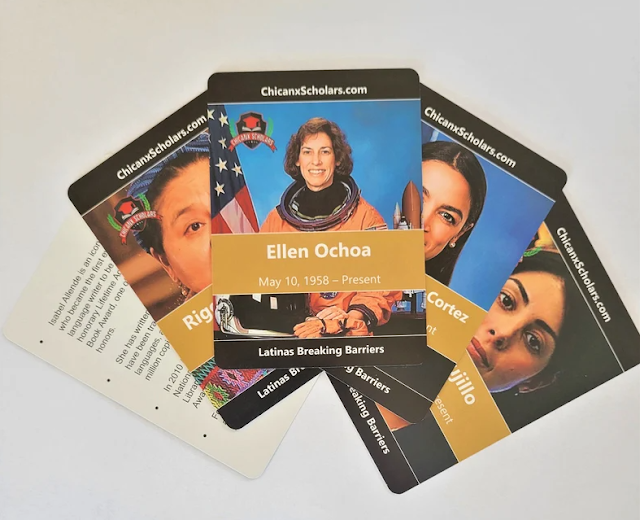
Latinas Breaking Barriers Flashcards


This, of course, is always a popular topic. Latinas love stories or resources that highlight the achievement of other Latinas. We already know how tough we are. But we want the world to know it, too. And when we see these stories being written down and handed down, there's an orgullo that we ALL feel. Because we know these women; they are our mothers, our grandmothers, our tías, and primas. 

I looked through this one curious to see if there would be anyone listed that I didn't recognize and I was happy to see quite a few of them. Many of them are from California - which is where the Chicanx founder, Danny, is from. If you are from California, you may find this to be especially interesting. But either way, what a great way to introduce new Latina faces and their accomplishments. 


Flashcards on Hispanic Figures & Events in History

How to Use Them


There are a few different ways to use these flashcards. As I mentioned earlier, the main way I would use them is as a spine for a class on Mexican studies, Mexican-American Civil Rights, or Latina studies. 

Students can memorize the names and accomplishments of each person, place, or event. They can also choose a card from the deck and do more thorough research or a presentation on the topic. (The picture above is one of the graphic organizers from my Historical Figure & Event Study Pages set.)

The decks may also be used as a trivia game to assess your child's knowledge of the subject. 

Or you can simply use them as conversation starters for your class or family.


What I Like


I find these cards to be a fabulous resource for parents regardless of whether or not they are homeschooling, as well as educators. I could easily create a homeschool course for my teen on any of the three topics covered by these flashcards. The figures and events on each card present the perfect jumping off point for more in-depth study and all together would be a great way for parents to supplement their children's history education. 

It's important to note, however, that the focus is primarily on Mexican/Mexican American figures and events. If that's what you're looking for, then these sets are for you! That said, the Latinas Breaking Barriers set does take a broader look and includes international figures such as Guatemala's Rigoberta Menchu, Chile's Michelle Bachelet, Puertorriqueña Dr. Antonia Novello, and several others.


Buy Them Today!


Visit the Chicanx Scholars shop on Etsy and take a look at their card decks for sale. Or, if you know exactly which one you want, you can click on these links to take you there:

Mexican History Flashcards


Latinas Breaking Barriers

Latinas Breaking Barriers


Want to find this post again? Pin it!

Flashcards on Hispanic Figures & Events in History


Other Posts That You May Enjoy


Thursday, September 1, 2022

Jovita Idár Lesson Plan

image source: U.S. Mint

After more than three quarters of a century, Jovita Idár is in the news again. Only this time, she is the subject, not the writer. Jovita will be one of five women recognized by the U.S. Mint in the 2023 American Women Quarters Program. (Learn about the other four women.) Her image will be found on a U.S. quarter. Maybe you've never heard of Jovita Idár. If not, continue reading to learn about this fierce, intelligent, and compassionate role model we have in our history. Scroll down to find my printable lesson plan. To learn about other remarkable figures, check out my post on Latinos in History Your Children Should Know.

This post contains affiliate links.

Who was Jovita Idár?

Jovita Idár was born in the border town of Laredo, Texas, in 1885. Jovita’s family was one of the few middle class Mexican families. Passionate about education and civil rights, Jovita’s father, Nicasio Idár raised his kids to be highly educated and with a strong sense of social justice. 

The second of eight children, Jovita excelled academically. It’s no surprise that she started off as a teacher. But she became frustrated with the lack of resources available to Mexican students and the one-sided curriculum that omitted or demonized Mexican figures and culture. She understood the lasting damage this did to Mexican children who learned that being white was good and being brown was bad. Before long, she decided that she would be more effective at creating social change as a journalist fighting for equal education and the civil rights of Mexican families. She began working for La Crónica, her family’s newspaper. Nicasio was proud of his daughter’s outspoken character and encouraged her interest and involvement in politics.

In her weekly articles, Jovita protested the racist, anti-Mexican culture that permeated not just her border town, but also throughout Texas and the Southwest. Signs refusing service to “Mexicans and dogs” were often hung in storefronts. Segregation was strong. And voter intimidation - frequently through violent killing and mutilations - was common. 

It’s important to note that Jovita did not restrict her articles to her father’s paper. She frequently wrote for other Spanish-language newspapers throughout her life, oftentimes under pseudonyms, such as “Ave Negra” (Black Bird) and “Astrea” (the Greek goddess of justice).


Jovita Idár and members of Union of Stone Mason and Bricklayers, Laredo, Texas, ca. 1915,
General Photograph Collection, UTSA Special Collections.


The First Mexican Congress

In 1911, Jovita and her family organized the First Mexican Congress - El Primer Congreso Mexicanista - in response to the lynching of a 14-year-old boy. The goal was to find solutions to the inequalities and racism that existed for Mexicans and Mexican Americans. It also strove to unite Mexicans on the issues they faced and create a unified front to fight for their rights and better living conditions. 

The event had a huge turnout with officials and citizens from both Mexico and Texas attending. It is regarded as one of the largest Mexican-American civil rights gatherings of the time.

Unsurprisingly, Jovita ensured that women were central to the event and not only helped to organize it, but were speakers, too.

The League of Mexican Women & the White Cross

Shortly afterward, Jovita also founded La Liga Femenil Mexicanista (the League of Mexican Women), which she modeled after the Mexican Congress. It’s goals were to engage and empower Mexican women, support women’s suffrage, teach adult literacy classes, and champion quality education for Mexican children. She served as its first president and their first project was providing free bilingual education to Mexican children from poor families. Its members were highly educated women and mostly working class who learned about politics so they could improve conditions in their communities.

Jovita saw the fluidity of living in a border town and sought to rally families on both sides of the border. Fully bilingual, she understood that the success of Mexican families required change in both countries. She left her journalism behind and served in the White Cross (founded by her best friend Leonor Villegas de Magnon) when the Mexican Revolution made its way across the Texas border in 1914. 

A couple of years later, Jovita was able to hang up her nurses’ uniform and return to her love of journalism when she began writing for El Progreso newspaper. After the paper ran an editorial criticizing President Woodrow Wilson's order to dispatch U.S military troops to the Mexico–United States border, Texas Rangers showed up at the newspaper, armed and ready to close it down. But Jovita herself barred entry and refused to let them enter while boldly quoting their First Amendment rights to freedom of the press. (They returned the next day when she was gone and smashed the printing press to bits.)

The First Latina Newspaper Owner

Two years later, in 1916, Jovita purchased her own printing press and started her own Spanish-language newspaper called La Evolución in which she continued to expose the discrimination Mexicans experienced. It was probably the first Latina-owned newspaper in the United States.

Wedding portrait of Bartolo Juarez and Jovita Idar, 
General Photograph Collection, UTSA Special Collections.

Five years later, Jovita’s brother, Eduardo, took over the running of the paper when Jovita moved to San Antonio with her husband, Bartolo Juárez. But Jovita didn’t stop her crusade for social justice. Together, they founded the Democrat club. And they quickly became leaders in the community. As such, Jovita embraced civic engagement and gave back to her community by founding a free kindergarten, volunteering as an interpreter at the local hospital, and assisting undocumented workers in getting their naturalization papers.

Jovita Idár Juárez died in San Antonio from tuberculosis on June 3, 1946.

She was fierce and intelligent and compassionate. What a wonderful role model we have in our history. 


Get the Lesson Plan


If you're looking for a lesson plan to share Jovita Idár's story with your older children, consider Lesson 1: Hispanic Activist Jovita Idár from Unit 1 of my curriculum, A More Complete History. 

This 30-page lesson plan is part of my comprehensive Teach for Justice unit that focuses on five important (and often forgotten) historical figures of the 1900s using articles and mini documentaries as our secondary sources. In this packet for high school students, you'll find lesson plans for in-person and virtual learning, as well as:
  • essay questions,
  • project based learning options,
  • and research & present topics.

It includes Google Drive options for worksheets and summative assessments allow for differentiated learning and virtual instruction. Answer keys and essay rubric are included.

Other Resources You May Enjoy


Friday, December 17, 2021

Free Vicente Fernández Reading Passage


Five days ago, the remarkable Vicente Fernández passed away. Often referred to as "Mexico's National Treasure," Chente (as he was known to many) left behind an amazing legacy of more than 80 albums and more than 300 songs. But what matters to most of his adoring fans is not the number of songs he sang, so much as their own personal memories and emotions that were tied to those songs.

Many people asked me for a printable dedicated to Fernández. I finally sat down and did a bit of research and created one for you. For those who are newsletter subscribers, keep an eye on your inbox this weekend for my latest newsletter, which includes a free download of this one-page reading passage with a brief history of the musical icon's life. 

If you aren't a newsletter subscriber, you can find the download in my TpT store here.

And if you'd like to go ahead and get your copy, you can subscribe to my newsletter and get an instant download of this printable reading passage delivered (for a limited time) right to your inbox.


You May Also Like Learning About...


Here are some of my other posts and reading passages that you may enjoy.

Tuesday, June 15, 2021

Lesson Plans for In the Heights

In The Heights Lesson Plans

Like many of you, I spent the weekend watching In the Heights. I read that some of you were renting theaters to go and watch with your trusted group of family and friends. Others, like myself, clicked on HBO Max and watched at home. 

I was fascinated to find that the movie finds its roots in Lin-Manuel Miranda's undergraduate imagination. He wrote his first draft of it in 1999 while attending Wesleyan. In 2004, he worked with author, Quiara Alegría Hudes, to further develop it and by 2008 it premiered on Broadway. 

I love it, of course. And decided it would be great for my teen. 

Psst! Did you know that it's available as a book?

I've heard a few teachers talking about it and started wondering if there were lesson plans available. And, yes! There are!

Listing them here for your pleasure...

In the Heights Lesson Plans

    Gage Skidmore from Peoria, AZ, United States of America, CC BY-SA 2.0, via Wikimedia Commons

Lin-Manuel Miranda Lesson Plans, Study Guides, and More


There are a lot of lesson plans about Miranda on TpT. Check out this great selection for a variety of ages:

For a Spanish video biography, I absolutely love this one for little children from CBeebies Español:


But I just couldn't find any in English that were kid/student friendly. When I do, I'll update this page.


Books for kids about Lin-Manuel Miranda


First the ones for little kids: (aff links)

And here's one for young adults:


You May Also Like Learning About...


Monday, April 19, 2021

Hispanic Poets: One-Page Reading Passages

 Hispanic Poets: One-Page Reading Passages

So much going on this week! Earth Day, Save the Frogs Day, and more.

But first, a reminder that we are in the middle of National Poetry Month. I already shared a reading passage for our former U.S. Poet Laureate, Juan Felipe Herrera. 

Today, I wanted to share this packet of notable Hispanic Poets from around the world. 

It features seven remarkable and prolific poets in world history. They are:

  1. Pablo Neruda
  2. Gabriela Mistral
  3. José Martí
  4. Julia de Burgos
  5. Sor Juana Inés de la Cruz
  6. Federico García Lorca
  7. Juan Felipe Herrera
This comprehensive packet is very similar to my 10 Latinas in History and Afro-Latinos in History packets. Each poet featured in a one-page reading passage and includes a multiple choice comprehension quiz. 

There are additional review sheets and pages for researching and essay writing. There is also a recommended reading list of children's books that feature each poet. The packet is 41 pages in all. 

At this moment, it is only available in English. A Spanish version will be made available this summer.

So if you're looking for a resource to celebrate National Poetry Month in a way that examines poets who are often overlooked in most poetry lessons, I hope you give this a try.

Other Posts You May Enjoy:


I also recommend the Highlights Book of Things to Write. It includes over 175 creative writing topics for kids, open-ended questions, games, activities and more.

Open-ended writing prompts invite kids to explore their world. Word games, writing tips and how-to’s show them new ways to put their thoughts into words. They’ll also explore how to create characters, write short stories, try out various styles of poetry, write about the things they care about, and so much more.

Thursday, March 4, 2021

Spanish Biography Video Series

For those of you with older children (tweens and teens), here is a resource not to be missed. 

While doing research for my poetry unit, I found this series from Universidad Pedagógica Nacional. The series “Maestros de América Latina” narrates the lives and works of eight schoolteachers who were instrumental in the history of Latin American education. 

These Spanish videos features the following historical figures:

  • Simón Rodríguez, 
  • Domingo F. Sarmiento, 
  • José Martí, 
  • José Vasconcelos, 
  • José Carlos Mariátegui, 
  • Gabriela Mistral, 
  • Jesualdo Sosa, and 
  • Paulo Freire.
To access all of the videos, click here for the playlist. 

This series is great for AP students, native speakers, and bilingual students. 

NOTE: I have not watched all of the videos, so please, Teachers, always watch beforehand to monitor for inappropriate content.

Wednesday, January 27, 2021

Sor Juana Inés de la Cruz - Lesson Plans, Videos, and Books for Kids


Sor Juana Inés de la Cruz - Lesson Plans, Videos, and Books for Kids
                                      A portrait of Juana during her youth in 1666, which states she was 15 at the time

Sor Juana Inés de la Cruz has been on my mind a lot lately. She was a 17th-century nun, self-taught scholar, and poet. Her passion for women's education has led to her being recognized as the first (published) feminist in the "New" World. 

In fact, Juana was a child prodigy who learned to read and write in Latin when she was three and wrote her first poem when she was eight. A voracious reader, Juana was mostly self educated as women were not allowed to attend the university. But her pursuit of knowledge and great intelligence soon earned her a reputation and the nickname "The Tenth Muse."

Juana rejected many marriage proposals and instead embraced the church, becoming a nun so that she could continue her freedom to study. Her library is thought to have been one of the largest with more than 4,000 books. And she was quite a prolific writer, but few of her writings remain. She wrote poetry in all its various forms (sonnets, ballads, odes, etc.), plays, and even villancicos (carols). 

Unfortunately, Sor Juana's outspoken nature eventually resulted in punishment by the Catholic church. She frequently challenged the church's patriarchy and the final straw was her critique of a sermon by a Jesuit preacher. It led to the confiscation of her library,  as well as her scientific and musical instruments. Sor Juana's final written words appear to have been a document of penitence which she bitterly signed "Yo, la Peor de Todas" ("I, the worst of all women").

Despite this, Sor Juana Inés de la Cruz is recognized today as one of the most influential writers of her time, and is considered a national icon of Mexico. She is said to embody the bridge between the Spanish Golden Age and the Enlightenment, Spain and New Spain, and Catholic philosophy and scientific pursuits.

Equally important, Sor Juana’s outstanding poetry and other writings make her a major figure at the beginning of Mexican literature.

She really was a fascinating woman and remarkable historical figure. There's so much more I could write about her, but I'll let you or your students do some research. And the videos included below are wonderful. 

I truly wish there were more resources for children about her. I have listed a few materials below and am working on some printables for a variety of ages. I'll add them to the bottom of this post when they are complete. 

Sor Juana Inés de la Cruz - Lesson Plans, Videos, and Books for Kids
Retrato de Sor Juana Inés de la Cruz (1648-1695), painted by Juan de Miranda


Lesson Plans


Books


Videos

I really enjoyed this video from TED-Ed, though I think the title is not quite accurate:


Another good one from BESE (best for older students):


Printables


Sor Juana Inés de la Cruz printable activities for kids


Two coloring and counting activities to introduce little ones to Sor Juana. Strengthen number recognition and number order with this simple set of activities.

Sor Juana Inés de la Cruz reading passage for students

(4th - 8th)

This is a brief history of Sor Juana Inés de la Cruz, the 17th-century nun, self-taught scholar, and poet. Learn who she was and why she is significant in world history. This informational text is written for students in 4th - 8th grade. It includes an 6-question comprehension quiz plus answer key.

You May Also Like Learning About...


Here are some of my other posts and reading passages that you may enjoy for Women's History Month.


LinkWithin

Related Posts Plugin for WordPress, Blogger...