Showing posts with label Latino authors. Show all posts

Monday, June 13, 2022

7 Fantasy Books by Latino Authors for Tweens & Teens


There are just so many wonderful books hitting the market and I realized the other day that I haven't posted anything recently for tweens and teens. 

So if you are looking for some great reads by wonderful authors for your child to enjoy this summer, consider one - or all! - of these titles. 

Happy reading!

This post contains Amazon affiliate links. 
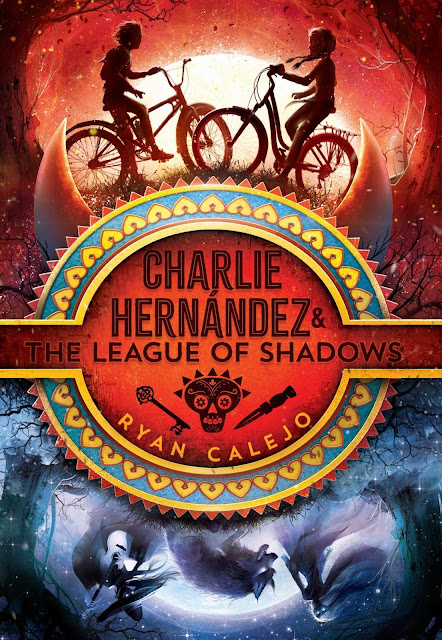

by Ryan Calejo

Charlie Hernández has always been proud of his Latin American heritage. He loves the culture, the art, and especially the myths. Thanks to his abuela’s stories, Charlie possesses an almost encyclopedic knowledge of the monsters and ghouls who have spent the last five hundred years haunting the imaginations of children all across the Iberian Peninsula, as well as Central and South America. And even though his grandmother sometimes hinted that the tales might be more than mere myth, Charlie’s always been a pragmatist. Even barely out of diapers, he knew the stories were just make-believe—nothing more than intricately woven fables meant to keep little kids from misbehaving.

But when Charlie begins to experience freaky bodily manifestations—ones all too similar to those described by his grandma in his favorite legend—he is suddenly swept up in a world where the mythical beings he’s spent his entire life hearing about seem to be walking straight out of the pages of Hispanic folklore and into his life. And even stranger, they seem to know more about him than he knows about himself.

Soon, Charlie finds himself in the middle of an ancient battle between La Liga, a secret society of legendary mythological beings sworn to protect the Land of the Living, and La Mano Peluda (a.k.a. the Hairy Hand), a cabal of evil spirits determined to rule mankind. With only the help of his lifelong crush, Violet Rey, and his grandmother’s stories to guide him, Charlie must navigate a world where monsters and brujas rule and things he couldn’t possibly imagine go bump in the night. That is, if he has any hope of discovering what’s happening to him and saving his missing parents (oh, and maybe even the world).


J.C. Cervantes

Zane has always enjoyed exploring the dormant volcano near his home in New Mexico, even though hiking it is challenging. He'd much rather hang out there with his dog, Rosie, than go to middle school, where kids call him Sir Limps a Lot, McGimpster, or Uno--for his one good leg. What Zane doesn't know is that the volcano is a gateway to another world and he is at the center of a powerful prophecy.

A new girl at school, Brooks, informs him that he's destined to release an evil god from the ancient Maya relic he is imprisoned in--unless she can find and remove it first. Together they return to the volcano, where all kinds of crazy happens. Brooks turns into a hawk, a demon attacks them in a cave, and Rosie gives her all while trying to protect Zane.

When Zane decides to save his dog no matter the cost, he is thrust into an adventure full of surprising discoveries, dangerous secrets, and an all-out war between the gods, one of whom happens to be his father. To survive, Zane will have to become the Storm Runner. But how can he run when he can't even walk well without a cane?
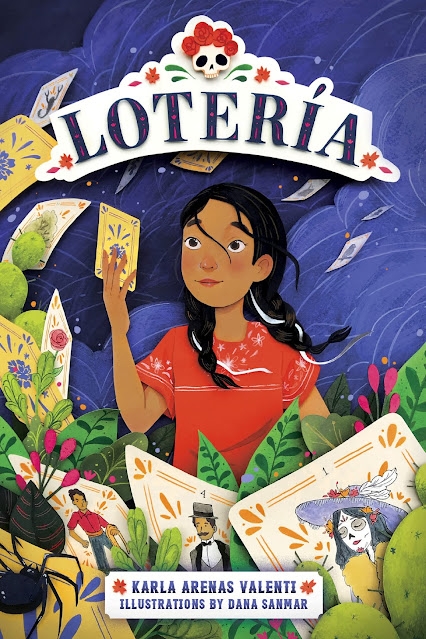

by Karla Arenas Valenti

In the hottest hour of the hottest day of the year, a fateful wind blows into Oaxaca City. It whistles down cobbled streets and rustles the jacaranda trees before slipping into the window of an eleven-year-old girl named Clara. Unbeknownst to her, Clara has been marked for la Lotería.

Karla Arenas Valenti weaves an adventure steeped in magic and mythology—gorgeously illustrated by Dana Sanmar—exploring the notion of free will in a world where fate holds all the cards.


by Kaela Rivera

Living in the remote town of Tierra del Sol is dangerous, especially in the criatura months, when powerful spirits roam the desert and threaten humankind. But Cecelia Rios has always believed there was more to the criaturas, much to her family’s disapproval. After all, only brujas—humans who capture and control criaturas—consort with the spirits, and brujeria is a terrible crime.

When her older sister, Juana, is kidnapped by El Sombrerón, a powerful dark criatura, Cece is determined to bring Juana back. To get into Devil’s Alley, though, she’ll have to become a bruja herself—while hiding her quest from her parents, her town, and the other brujas. Thankfully, the legendary criatura Coyote has a soft spot for humans and agrees to help her on her journey.

With him at her side, Cece sets out to reunite her family—and maybe even change what it means to be a bruja along the way.


by Tehlor Mejia

Space-obsessed 12-year-old Paola Santiago and her two best friends, Emma and Dante, know the rule: Stay away from the river. It’s all they’ve heard since a schoolmate of theirs drowned a year ago. Pao is embarrassed to admit that she has been told to stay away for even longer than that, because her mother is constantly warning her about La Llorona, the wailing ghost woman who wanders the banks of the Gila at night, looking for young people to drag into its murky depths.

Hating her mother’s humiliating superstitions and knowing that she and her friends would never venture into the water, Pao organizes a meet-up to test out her new telescope near the Gila, since it’s the best stargazing spot. But when Emma never arrives and Pao sees a shadowy figure in the reeds, it seems like maybe her mom was right. . . .

Pao has always relied on hard science to make sense of the world, but to find her friend she will have to enter the world of her nightmares, which includes unnatural mist, mind-bending monsters, and relentless spirits controlled by a terrifying force that defies both logic and legend.


by Donna Barba Higuera

Había una vez . . .There lived a girl named Petra Peña, who wanted nothing more than to be a storyteller, like her abuelita.

But Petra's world is ending. Earth has been destroyed by a comet, and only a few hundred scientists and their children – among them Petra and her family – have been chosen to journey to a new planet. They are the ones who must carry on the human race.

Hundreds of years later, Petra wakes to this new planet – and the discovery that she is the only person who remembers Earth. A sinister Collective has taken over the ship during its journey, bent on erasing the sins of humanity's past. They have systematically purged the memories of all aboard – or purged them altogether.

Petra alone now carries the stories of our past, and with them, any hope for our future. Can she make them live again?


by Julian Randall

Twelve-year-old Pilar Violeta “Purp” Ramirez’s world is changing, and she doesn’t care for it one bit. Her Chicago neighborhood is gentrifying and her chores have doubled since her sister, Lorena, left for college. The only constant is Abuela and Mami’s code of silence around her cousin Natasha―who vanished in the Dominican Republic fifty years ago during the Trujillo dictatorship.

When Pilar hears that Lorena’s professor studies such disappearances, she hops on the next train to dig deeper into her family's mystery. After snooping around the professor's empty office, she discovers a folder with her cousin’s name on it . . . and gets sucked into the blank page within.

She lands on Zafa, an island swarming with coconut-shaped demons, butterfly shapeshifters, and a sinister magical prison where her cousin is being held captive. Pilar will have to go toe-to-toe with the fearsome Dominican boogeyman, El Cuco, if she has any hope of freeing Natasha and getting back home.


Other Posts You May Enjoy


Thursday, May 12, 2022

Pablo Neruda Reading Passage


Pablo Neruda is such a controversial figure. People seem to either love him or hate him.

Either way, parents and teachers are looking for resources to study the poet. And these resources can be hard for a person to find. It seems like the online lesson plans come and go, but I just updated my post Pablo Neruda Lesson Plans, Videos, Books, and More. 

This post contains affiliate links.

Pablo Neruda Reading Worksheet

I have also gone ahead and adapted the one-page reading passage in my Hispanic Poets packet into a more lengthy, stand-alone activity. It is now available in my TpT store.

This is an age-appropriate short biographical intro to the poet, not the politician. 

It's best suited for students in 4th through 7th grade and is available in both English or Spanish - you choose the language that meets your needs. 

And, yes, it does include an 8-question quiz to test your student's comprehension. 

How to Use It

This reading passage may be:

  • assigned as homework, 
  • for an in-class assignment, 
  • as an activity for a sub,
  • as part of a larger lesson plan (see my post on Neruda lesson plans)

You can also have your students use it to:
  • read aloud to practice pronunciation in Spanish or English
  • create a story board
  • fill out a story map
  • write a summary
  • complete a K-W-L chart
  • create a timeline of Neruda's life
  • identify and define new vocabulary
  • find Chile on a map
  • write their own poem...in a different colored ink?
  • write a character analysis
  • complete a Venn diagram to compare/contrast Neruda with another poet

This reading passage would do well with studies about Neruda, Chile, poets, writers, literature, nature, Hispanic Heritage Month, historical figures, and more.

And if you are looking for a book that would pair nicely with this introduction, I recommend:


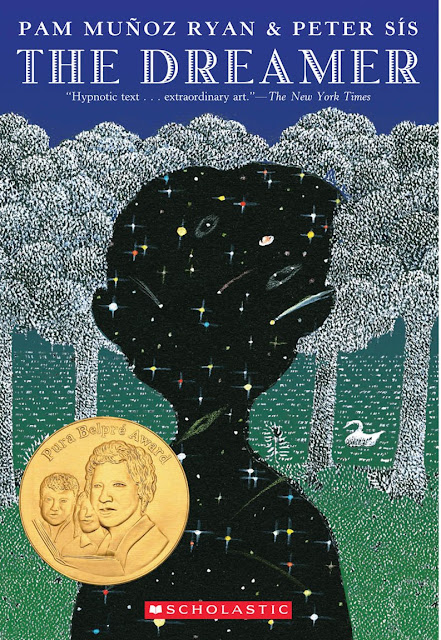
The Dreamer by Pam Munoz Ryan and Peter Sis. It's also available in Spanish: El soñador


Other Posts You May Enjoy:


Thursday, April 15, 2021

Guacamole: A Cooking Poem


Guacamole: Un poema para cocinar, A Cooking Poem

by Jorge Argueta
illustrated by Margarita Sada

Groundwood Books (Libros Tigrillo) never fails to deliver beautiful stories filled with culture and warmth. Written by the poet Jorge Argueta, Guacamole: Un poema para cocinar, A Cooking Poem (aff link) is more than just a simple recipe centered around the traditional Latin dish. Instead, it is a glimpse into the world of a child who creates something special for her family using her imagination and joyful spirit.

Told in the first person, our narrator is a young girl for whom aguacates resemble green precious stones,  limes are like big crystal marbles, and their seeds like little pearls. This delightful book comes with full text in both English and Spanish. 

Young chefs will thoroughly enjoy this book. Immediately after reading the book, my daughter made out our grocery list to include cilantro and aguacates. I love books that call children to action and appreciate how Guacamole inspires children to get in the kitchen and put together a simple dish that everyone will enjoy.

The illustrations are so creative and engaging for young readers. I like how Sada has given the reader images that reflect the imagination of the young girl in the tale.

Here's a sample passage from the book...

Ahora le agregas sal, no mucha.
Cántale a la sal
cuando la agites,
para que como pringuitas
de llovizna blanca
caiga sobre el aguacate verde.

Sal salita de mi salero
échale la sal primero.


Now add salt, not too much.
Sing to the salt
as you shake it
so that little spatters
of white drizzle
fall like rain on the green avocado.

Salt, salty salt from my saltshaker,
salt goes in first.

If you loved Argueta's book, Arroz con leche/Rice Pudding: Un poema para cocinar/A Cooking Poem (aff), you'll love this next book in the series!

Parents and teachers can use this book to make guacamole with their children and then talk about the concepts of family, imagination, similes, poetry, and cooking.

If you would like to buy your own copy of Guacamole: Un poema para cocinar, A Cooking Poem, here's my affiliate link to it on Amazon:

Monday, August 31, 2020

Resources for Bless Me, Ultima

The one book that changed my life and opened up a whole new world to me was Bless Me, Ultima by Rudolfo Anaya. I read it my Junior year in high school while taking a Multicultural Literature class. Before this I had NO IDEA that there was a whole genre dedicated to Latino lit. And I was so overwhelmed to see so many of the traditions and, yes, even figures from my childhood it literally made me weep. Until I was around 14, my childhood was steeped in Mexican culture. Mostly thanks to my great grandmother, with whom we lived. But she passed away when I was 12, leaving behind a giant hole that I never knew was there until I read Anaya's book. 

A year or so after her death, my mother and I moved away and I started at an all-English school where I think that maybe I was one of only two or three Hispanics in the upper school. My mother was busy working and all the traditional customs or events that we would participate in were left behind. My heritage and culture quietly slipped away a little more and more each day. 

Until I read that book.

I never met Anaya. But when he died not long ago, I felt so deeply grieved. I think it was because of that precious gift of my past and myself that he gave to me. And today, now that both my great grandmother and mother have passed away, I feel that my connection to my culture tries to quietly slip away every day. And if it weren't for my children and my decision to continue MommyMaestra and my work writing education materials, I think I would sadly drift into the mostly white culture that surrounds me. I fight every day to hold on to the little girl who celebrated las posadas, ate authentic chalupas, received "limpias" from my 'Buelita, and wore traditional dresses to celebrate every 16 de septiembre. 

So in honor of Señor Anaya, I want to dedicate today's post to his remarkable book that saved me. I've been thinking of having my older kids read it this year and watch the movie. Perhaps you'd like to do so, as well.  

The following links are affiliate links.

The Book

There are actually two versions of the cover, but the content is the same...


And did you know it is also available in Spanish?


The Study Guide

This probably excites me more than anything else. The Study Guide Student Workbook has 114 pages and works for both public/private school and homeschool classrooms. But note: it is only available in English.


Here's another one:


And on TpT, there is a whole ton of downloadable resources!


The Movie

Sadly, the price of the DVD has soared in the last few weeks. But you can still rent or buy it from Amazon Prime for a reasonable price:


An Interview with Rudolfo Anaya

Here's a few fabulous interviews with the author...


Thursday, February 20, 2020

The Making of a Children's Book: Luci Soars


Do you ever wonder how a picture book is made? Here's your chance to watch how author/illustrator Lulu Delacre does it. Her new picture book, Luci Soars (aff), will be coming out in August. And she's put together a little teaser video to tell how she came up with the idea and how she created the artwork.

Check it out!


Lulu is a remarkable writer and artist. Her award-winning books include Turning Pages: My Life Story (with Supreme Court Justice Sonia Sotomayor), Olinguito, from A to Z!, Us, in Progress: Short Stories About Young Latinos, and the excellent bilingual beginner reader series Rafi and Rosi.


Tuesday, December 10, 2019

Playing Lotería: And Interview with Author René Colato Laínez

Yesterday, I shared a post about Google's Doodle celebrating the popular game from Latin America: LOTERÍA! Today, I'm sharing an interview with author René Colato Laínez that was originally published 11 years ago(!) on the Latin Baby Book Club by Aurora Anaya-Cerda founder of La Casa Azul Bookstore.


La bandera! El sol! La chalupa! La sirena!.. LOTERIA!!!

Loteria is one of my favorite childhood games. It brings back so many memories of Mexico…everyone sitting around the front porch, children laughing, everyone using frijoles or bottle caps to cover their cards. I remember being in awe of one of mi tias, who would play 4 cards at a time! Loteria is a fun game for the entire family, and if you have a ‘caller’ who says dichos…it’s 10 times more fun!

This month I bring you an interview with Rene Colato Lainez and his book is Playing Loteria / El Juego de la Loteria.
In this charming story, a little boy visits his grandmother in Mexico, and with the help of la loteria, learns a new language and how special the bond between a boy and his grandmother can be. Together they discover a world of language and come to realize that loved ones truly do have special ways of understanding each other. Accompanied by vibrant illustrations, this story also offers a Spanish lesson. The rules of the game are included so you can play and learn at home, too.

1. What was the inspiration behind "Playing Loteria/ El Juego de la Loteria"?
Part for the inspiration was my love for the Lotería. I grew up in El Salvador saying the phrases: “El arbol”, “El gallo”, “El corazón.” The Lotería was the most popular spot at the fairs and festivals. Every time, we went to la feria, I had my favorite places to visit: the circus, the rides, and of course the lotería stand.
The other part for the inspiration was the students at the school where I work. Most of them come from Latino families but they have trouble speaking Spanish. I wanted to write a story where these students can discover that it is possible to speak two languages and that we need to be proud of our culture.

2. Each family has their own version of how to play Loteria, how/when did your family play the game?
At home, we played the traditional way. We had to cover all the pictures in order to win and yell “Lotería”. My older brother was always, the caller. He was very funny and said a lot of dichos and play of words every time he called the cards. All the family kids and neighbors sat in a circle on the patio and began to play. We played on weekends and after school.

3. Tell us about your experience at "La Voz Estudiantil"I always received very positive feedback from my teachers, every time I wrote a poem or short story. I enjoyed reading the Spanish paper at school “La Voz Estudiantil” and I actually envisioned myself writing on the paper. After writing a poem in my Spanish class, I was invited to join “La Voz Estudiantil.” It was a wonderful experience, I remembered the time when I wrote a long story. The editor said that it was too long but that we could publish it in chapters. After the first chapter, I had many students asking me “What will happen next, please tell us.” They could not wait for the next issue.

4. How can parents encourage their children to celebrate and embrace their Latino roots?The Latino culture is rich in language, dances, and games. Parents can embrace their Latino roots to their children by dancing and singing songs (I love Cri Crí’s songs), playing clap hand games, saying dichos and refranes, telling family and folktale stories, playing traditional games like la lotería, and by reading Bilingual, Spanish and English books that celebrate the wonderful of the Latino culture and language.

Tuesday, August 30, 2016

Free Author Skype Opportunity for Teachers


Attention teachers! Hispanic Heritage Month is coming up and it would be the perfect time to invite a Hispanic author into your classroom. There are SO many BENEFITS to having professional writers visit with your students. Authors bring a different perspective and voice to classrooms, they encourage students to express their own opinions and tell their own stories, and (in this instance) highlight the importance and value in bilingualism.

Classroom Skype Opportunities


If you think this would be a great activity for your classroom, I have a unique opportunity to share! My friend, Mariana Llanos, author of seven children's books, is offering classroom Skype opportunities...most of them for free! Mariana has designed four different lesson plans that last about 45 minutes. They include a Q&A at the end, so your students can ask whatever they want.

The lesson plans she's developed cover these topics:
  • Imagination & Writing (Free)
  • A Rollercoaster of Emotions (Free)
  • Research and Creative Writing (Free)
  • Mock Election & Superpowers ($35)
Mariana is such a talented storyteller with children of her own, so I know that her visit to your classroom would be engaging, informative, and educational. She's had lots of experience with these Skype lessons because she's visited more than 60 classrooms! Visit her site here to learn more about each one and to read about things to do with your students before and after each visit. Or if you would prefer for her to visit your class in person, click here. 

Psst! Mariana also offers Skype visits to immersion classes!

Learn More About Mariana and Her Books:


Friday, July 24, 2015

L4LL's Summer Lunchtime Hangouts with Latino Authors

This summer, Latinas for Latino Lit hosted a series of Google hangouts with Latino authors. These authors are the voices of our cultures and their stories are the reflection of our children's experiences. They play a critical role in motivating and inspiring our kids to embrace their heritage and to strive to make their dreams a reality.

The last lunchtime hangout took place this afternoon at lunch, and so I thought that just in case you missed any of them, that I would share them all here. If you enjoy these videos and learning about the books and life stories of these authors, be sure to check out the L4LL You Tube channel which contains many curated videos specifically on the topic of Latino children's literature and literacy.

Enjoy!


Friday, January 30, 2015

PBS KIDS Writers Contest Is Now Open


Hey, parents! Did you know that the annual PBS KIDS Writers Contest opened yesterday? My daughter had a great time when she participated in the contest, writing and illustrating her own adventure story a few years ago. She's too old to participate now, but I remember well how proud she was to create her story and mail it off to PBS KIDS.  

As a Latina mom, I want to urge you to encourage your children to write their own stories. Despite the fact that minorities in the United States will soon be the majority (37% of the current US population are people of color), the number of children's books that contain multicultural content stubbornly remains at only 10 percent. And of that, only a little over 1 percent are Latino children's lit titles.   

We need our stories to be heard. But more importantly, we need them to be written. So get out some paper and sharpen up those pencils and support your child's storytelling skills!

The Writers Contest is designed to promote the advancement of children’s literacy skills through hands-on, active learning. The contest is open to children in grades K-3 and encourages creative thinking and storytelling, while building literacy skills through the creation and illustration of original stories.

To enter, kids can submit stories to their local stations, and local winners will then be entered into the national contest. National winners will be announced during the summer of 2015, and the winning stories will be featured on pbskids.org/writerscontest.

This year, the judges include acclaimed writers, producers and children’s media creators, including Marc Brown, author and illustrator of the ARTHUR book series, and the Kratt Brothers, Martin and Chris, from the PBS KIDS show WILD KRATTS. The national winners will receive prize packages including ARTHUR books and a personal technology device courtesy of PBS.


Wednesday, April 30, 2014

Celebrate Día de los Niños with Free eBooks and Live Author Readings!

L4LL's 2014 Dia eBook


Happy Día de los Niños, Día de los Libros! Are you celebrating today?? We are! First off, don't forget to head over to Latinas4LatinoLit.org to download your free eBook! If you didn't have a chance to follow along the Día Blog Hop featuring 24 Latino authors and illustrators (such as Amy Costales who I was so honored to host here on MommyMaestra), you can still go back and read all of the fabulous essays. You'll find the schedule here.


THEN, after you do that, don't forget to head over to Qlovi to listen to some of your favorite Latino authors and illustrators reading aloud one or two of their own books LIVE online. Best part? It's FREE! Just register and then follow along. You can even submit questions during the livestreams.

And finally? Grab your chil and a book and READ! Grab two books! THREE! Take turns reading aloud to each other.

And enjoy your day.

¡A leer!

Abrazo......


Monday, April 7, 2014

Amy Costales for the L4LL Día Blog Hop

Yesterday, Día founder Pat Mora kicked off the Día Blog Hop with a post on Latinas4LatinoLit.org. As a co-founder of Latinas for Latino Lit, the blog hop is one of the events that makes me proud to be Latina and a champion of literacy for our children. Back for the second year in a row, the blog hop features a different Latino author or illustrator on a different blog every day this month starting on the 6th. You can find the full schedule here.

All of the guest writers were asked to write on the topic "Reflection." Today on MommyMaestra, author Amy Costales reflects on her reason for picking up a pen to write for Latino children. I hope that you are as moved by her article as I am.


© il-fede - Fotolia.com

The issue of reflection, or rather the lack of it, for my daughter, her friends, her cousins and my students is what lead me to write. I knew a group of children who were caramel-skinned, spoke Spanish and shared housing with extended family members. I watched them use the word American to mean white, draw themselves blond, hesitate to enter parks where everyone else was white and looked at us weird when we spoke Spanish. It was the 90's and Proposition 187 had just passed in California. There was an animosity in the part of Orange County where we lived that you could see, feel and hear in the schools, in the store, if you went to the wrong beach. I started writing.

I wanted to portray the Mexican immigrant community that most the children I knew, including my daughter, were growing up in. I wrote about shared housing, a relative coming from Mexico, families working together, a loved used car, uncles who live in the garage to keep their rent cheap, undocumented immigration, children who sleep on pulled out mattresses in the living room, fathers who work two jobs, single mothers and, most importantly, love. Children coming from those backgrounds deserve to have their lives portrayed as normal. I wanted to write those books for those kids.

The daughter that once inspired me to write is older than I was when I first grabbed a pencil and a notebook and started my first attempt at picture books. Her cousins and friends that also inspired me grew up and went to college in places like Cal State Fullerton, Brown, UC Santa Barbara and (due to deportation) Tamaulipas, México. I got busy with an M.A. program and then with the efforts to start a Spanish for Heritage Speakers program at the University of Oregon where I work. Twenty years have slipped by. And yet the lack of reflection has not been resolved. This trimester I asked 60 young Latino college students if they learned about the Bracero Program in their K-12 education. Only two said yes. Half of these kids were participating in a UO high school equivalency program for students whose families did agricultural work. Of the other half, most of their families had done agricultural work. More importantly, when I asked them to look into their families pasts, most of them had Bracero grandparents and sometimes also great-grandparents. Their family stories included two, three or four generations of crossing the U.S. border to work in los files (the fields), mostly starting with the Bracero Program. When we studied the program and listened to the family stories, one young woman said, "Me siento robada de mi historia." She should feel robbed of her history , or her story, because in Spanish they are beautifully the same word. The Bracero Program brought 4.5 million people across the border and created transnational Mexican communities. It is a vital piece of history in understanding immigration and the growing Latino population today. How is it possible that year after year most of my students say they have never heard of it? I am using the Bracero Program as an example of a greater problem, which is a lack of representation of Latinos in history and literature in our K-12 programs.

And yet it is not just Latino students who are robbed of this history. It is a nation. It is not just Latino students who are robbed of their reflection in literature. It is a nation. 25% school-age children in the U.S. are Latino. By 2050, that number is predicted to be closer to 50%. To ignore Latino history and literature is to ignore la historia of a very significant segment of our population. It is equivalent to a nation not seeing its true self. As we go through this significant demographic shift being brought on by an aging white population and a young Latino population, an accurate reflection of nation would facilitate the change. I am no longer just concerned about how Latino children see themselves. I am concerned about how a nation sees itself. Latinos are part of the "we" that make this nation, as are all ethnic groups.

Personally, I am feeling the need to pick up my pencil again. I feel sad that I still have Latino students who use the word "American" to mean white. And if my daughter has grown, I now have a bilingual son who deserves a book about his life with his part Latina mother and his Mexican stepfather, as well as his Italian-American stepmother, and his Scandinavian-American father. He is as complex as this nation. This time I am going to think about the complexity of the Latino population itself, for as we write (or read) about Latino children, there is a diversity in regards to family, ethnicity, generations in the U.S., region, language, and social class that needs to be portrayed. It is a mosaic.


Amy Costales is an award-winning bilingual children's author. Her picture books include Hello Night~Hola noche, Abuelita Full of Life~Abuelita llena de vida, Lupe Vargas and Her Super Best Friend ~Lupe Vargas y su super mejor amiga, Sundays on Fourth Street ~Los domingos en la calle Cuatro and Grandpa Used to Live Alone~Abuelo vivía solo. She teaches Spanish for Heritage Speakers at the University of Oregon. Learn more about Amy and her books on her website, AmyCostales.com.

Tuesday, April 1, 2014

L4LL Announces 2nd Annual Día Blog Hop


I have been very slow to post on MommyMaestra lately. And here is just one of the reasons: Today, Latinas for Latino Lit (of which I am a co-founder with my partner Viviana Hurtado) is announcing our 2nd annual Día Blog Hop!

Two dozen (24!!!) Latino authors and/or illustrators have been paired with 24 Latina bloggers, and all of them have enthusiastically agreed once again to support Latino children's literacy. Each day, beginning April 6th, a different blog will host a different author/illustrator on their site. The article they've submitted are moving and passionate, sharing with all of us a glimpse into their lives and what motivates them to write for children.

You can find the complete schedule here on the L4LL website. I hope you'll follow along. Here on MommyMaestra, I'll be hosting author Amy Costales next Monday, April 7th.

The Día Blog Hop will end on April 30th (Día de los Niños, Día de los Libros) with a special announcement.

Gracias to all the authors, illustrators, and bloggers for supporting Latino children's literacy!

Thursday, April 11, 2013

Book Review: Marisol McDonald Doesn't Match/Marisol McDonald no combina


I'm so excited to review this book during Latina's 4 Latino Literature and Mommy Maestra's launch of the Blog Hop with Latino authors and illustrators! Diego and I have been reading Monica Brown's bilingual book Marisol McDonald Doesn't Match / Marisol McDonald no combinaover and over. 

We identify with the book, especially Diego (Mexican-American born in Japan)! Insisting on taking tortillas to school with his ham and cheese, Diego loves how Marisol, a little Peruvian-Scotish-American girl, spreads peanut butter on her burrito! She doesn't care what people will say, she does things her way, a little mixing and matching from both her parents' cultural influences and her American upbringing. Not everyone is so understanding of Marisol's differences though. Her red hair and brown skin don't "match." Even her cousin doesn't get it! She chooses to wear polka-dots with stripes, uses print and cursive handwriting together, and her ideas of playtime and art are different too. Marisol starts to believe that she should just be like everyone else, until her teacher writes her a special note pointing out the importance of her uniqueness. 

Oh, how Diego loves that the teacher is also multi-cultural (he is convinced she is half Japanese). Her heartfelt note to Marisol hits close to home. I really appreciate that the author included that being bilingual is special too. Marisol goes on her way to surprise the readers with yet another unique choice. You have to get the book to find out! This had us both laughing out loud.

The illustrator, Sara Palacios, does an incredible job with the art work. Not only is the text in Spanish and English, but the pictures include a sprinkle of Spanish notes taped to the refrigerator in Marisol's house, English labels on her food products, and cazuelas acting as "souvenirs" from Peru; it reminds me of our home!


Marisol McDonald Doesn't Match / Marisol McDonald no combinais a great book for multi-cultural families, bilingual homes or for anyone who often feels a little unique. Diego and I recommend it wholeheartedly! Enjoy!

Disclosure: Amazon links are my Amazon affiliate links. 

-------------------------------------------------

 
Betty Galvan, is helping her readers "find the positive and seek the benefits" over at her blog, MyFriendBettySays.com.

She is the mother of three beautiful little boys and a teacher.


LinkWithin

Related Posts Plugin for WordPress, Blogger...