Showing posts with label homeschool methods. Show all posts

Friday, November 4, 2022

Homeschooling the Charlotte Mason Way


I hope you enjoy this post in a series on homeschool methods. Each post is written by bilingual and/or Latina moms who have chosen a particular style in which to homeschool their children. If you are new to homeschooling and are looking to find the right teaching/learning path for your family, perhaps this post on homeschooling the Charlotte Mason way will appeal to you. For a look at other teaching styles, take a look a my Brief Description of Homeschooling Methods, or scroll down to the bottom of this post for links to the other posts in this series.

The following is a guest post by Lauren Stengele, a bilingual homeschooling mom. She shares her journey on BilingualTogether.com. This post contains affiliate links.


The Charlotte Mason Method

Although I have been homeschooling for seven years now, I have come slowly into the Charlotte Mason philosophy of education. I was introduced to her sometime in our second year of homeschool, and dismissed her whole philosophy as “just reading books and looking at nature.”

In Vital Harmony by Karen Glass

However, the following year, I picked up Karen Glass’ book, In Vital Harmony, and was blown away with the pursuit of beauty and integration of all learning that characterizes the Charlotte Mason philosophy. If you are looking into Charlotte Mason, I highly recommend starting with this book.

Who was Charlotte Mason?

Charlotte Mason was an educator in England during the late 1800s and early 1900s. She held to radical notions (for the time) that children are persons, and not just empty sponges to be filled with information. She believed that all children can learn, that all children want to learn, and an educator’s job is to spread a feast of ideas for their students.

This feast includes a deep and meaningful study of nature, starting with your local fauna and flora. The feast includes reading good books by great thinkers, “living books” as they are called in Charlotte Mason circles. She believed that “education is the science of relations,” which means that if a child is brought to this feast of education, the child cannot help but draw connections for themselves. They discover how history and math connect in Galileo. Or how geography impacts mythology, when they recognize similar threads throughout the stories of the Americas, but very different threads throughout the stories of Europe.

Other cornerstones of a Charlotte Mason education are narration, habit formation, practical life skills, and handicrafts. And yes, math and grammar are included, too. For time's sake, I won’t get into all of this here. If you are still curious, do pick up In Vital Harmony for an easy but thorough introduction into Mason’s philosophy.

Charlotte Mason Methodology


This sounds great, but what does this look like day-to-day?

As I came to realize the richness and depth of the Charlotte Mason philosophy, I began implementing it more and more in our homeschool. We have always had a literature-based homeschool, but Mason’s philosophy has freed me up more and more to focus on the quality of what we read, rather than the quantity.

In our homeschool, we spend a lot of time reading together, re-telling the stories we have heard, and discussing them. (My children are 10, 8, and 6, for reference). We start with Morning Time, during which time we sing, read poetry, and study composers. 

We move on to our read-alouds which cover history, literature, and science. For example, this year we are studying Medieval History. Since we began school this year, we have read Beowulf, and are currently reading The Twelfth Night by Shakespeare (both a picture book retelling, and the original). In Spanish, we are reading El Cid by Rosa Navarro Duran. We are also reading about birds and bats.

After read-alouds, we move into math and language studies which are one-on-one with each child. When I am working with one child, the other children have independent work. We usually finish our academic work around lunch time.

This leaves lots of time each day for free play and pursuit of their interests. However, it also leaves time for them to join me in the regular running of a household: dishes, laundry, cleaning, and cooking dinner. These life skills are just as essential in the whole education of a child as the academic work is.


Charlotte Mason in a Bilingual Homeschool 


One unexpected blessing of following this philosophy has been the freedom to stop searching for the perfect Spanish curriculum for our homeschool, and simply focus on finding beautiful books in Spanish to read with my children.

Yes, I still love to look at bilingual units and Spanish language resources, but I no longer feel the burden to find (or make) the perfect Spanish-language unit for my child’s interests, or our current history track. Instead, I now search for living books in Spanish on the subject. And we read…

This simple change has made homeschooling in two languages easier and more delightful than I thought possible!

Want to learn more?

Charlotte Mason herself wrote six large books on her educational philosophy. They are slow reading, but well worth it. If you want to start with one, I suggest Home Education. However, I will say again, the best introduction to Charlotte Mason is In Vital Harmony by Karen Glass. Also of note, there is a vibrant Mason community in the Spanish-speaking world, and a great place to start is A Living Education En EspaƱol website.


Other Posts You may Enjoy


Written by:

Lauren Stengele is a non-native Spanish speaker, language teacher, and bilingual homeschooling mom. Her blog, BilingualTogether.com, shares homeschooling resources for bilingual families, including free Morning Time plans.

Monday, August 1, 2022

Homeschooling the Montessori Way


Montessori. Some homeschool mamas read that word and turn tail and run because how could they possibly incorporate Montessori approaches into their homeschool when Montessori schools themselves are taught by specially-trained teachers and cost more money than typical families can afford?

“I can’t afford Montessori training,” they say. 

“I can’t afford Montessori materials,” they say. 

“I can’t even wrap my head around what Montessori is!”

Although having Montessori training and beautifully crafted Montessori materials can absolutely be helpful when trying this approach in your homeschool, it is NOT mandatory. Like all things homeschooling, this is NOT an all-or-nothing methodology. You, the homeschooling parent, can make it work for your homeschool family and you do not need gobs of money to do it. Be ready to customize to suit the needs for your family and whether you settle on creating a simple Montessori-inspired shelf for your homeschool or end up buying an entire Montessori curriculum, just know that all you truly need is an eager mind and open heart. But first, what is the Montessori Method? To answer this, we need to first learn who Dr. Montessori was. 

The following post contains affiliate links.


Who was Dr. Maria Montessori?

Full Disclosure: The following may turn into an entire paragraph of me fan-girling over Dr. M because she is a rock star and I want to be just like her when I grow up (I’m currently 39 so I suppose that should be soon, oh well.)

Italy 1892, a young Maria Montessori, having already studied mathematics, went to the University of Rome to study medicine. During her medical training at an asylum for children, Dr. Montessori’s life would change. She observed these children, children society had discarded because they were “retarded” or “insane,” playing with crumbs. The nurses dismissed this behavior as “greed” because they thought the children wanted more food. The compassionate heart of Dr. Montessori, coupled with her brilliant scientific mind, observed something completely different. Dr. Montessori hypothesized these children just wanted something to play with. Their minds needed something to play with. Children need to play. The first Montessori schools were established in the slums of Rome where she was able to observe children and refine her method. Fast forward over hundred years later and Dr. Montessori’s methods and school still impact education all over the world and over the last few decades have trickled into the homeschool sphere. Dr. Montessori’s story is fascinating and I strongly recommend reading her own words and story through her books, particularly The Montessori Method and Maria Montessori: Her Life and Work by E. M. Standing. There is also an adorable children’s book about her from the Little People, Big Dream Series, Maria Montessori by Ma Isabel Sanchez Vergara. 


What is the Montessori Method?

The main goal of the Montessori Method is to promote the joy of learning through a hands-on and step-by-step approach that emphasizes repetition. The method is based on the belief that children should be free to succeed and learn without restriction or criticism.

In the early years, children are taught to develop their observation skills through a variety of hands-on activities that explore the senses, movement, and coordination. The child is provided with a safe but stimulating environment where they can explore and learn without fear of harm.

Grade school children are allowed to proceed at their own pace, exploring the subjects of math, science, reading, and writing in such a way as to develop their abstract thinking ability. There is a great emphasis on encouraging the child to absorb their environment and culture.

In Montessori education you will find that standard subjects like math, language arts, culture, science, etc., but you will also find that Dr. M also felt sensory learning and life skills are incredibly important to the development of the child. Therefore, you will find Montessori education treats Practical Life and Sensorial Learning as their own subjects. 

I would also like to focus on two other aspects of Montessori instruction: the  absorbent mind and sensitive periods.  Because Montessori emphasizes observation of the child and respect to their development, it is important to understand that children have what Dr. M calls an “absorbent mind” and in fact she wrote an entire book about The Absorbent Mind.


Children cannot help but learn from everything that’s going on around them. You have probably experienced it when your small child embarrassingly repeats something you said when you thought they weren’t listening…That would be their lovely absorbent mind. So, teaching things like grace and courtesy for example, a hallmark of Montessori instruction, would be easily taught because they learn what they see anyway. Montessori at Home or School: How to Teach Grace and Courtesy is a helpful book to help you address just that.


Regarding sensitive periods, these are the stages of development where the child just jumps ahead at a new skill. For example, there is usually a moment in a toddler’s development where they go from speaking a few words and phrases to suddenly talking all-day-long. Right there, that’s the moment they are in a sensitive period for language.  That is your que to talk right back, ask questions, read lots of books, sing lots of songs, and do what you can to nurture their language development.  Living Montessori Now has a wonderful post on encouraging your child's sensitive periods.


How To Start Implementing the Montessori Method in Your Homeschool


Allow me to make this as easy as possible for newbies to Montessori to get started by recommending books, blogs, and ready-made Montessori programs for homeschooling. After years of searching and researching, these recommendations are, in my humble opinion, solid Montessori in approach, have the best reviews from experienced parents, and offer the best support for families.

Books


Begin first by reading a couple of books about the Montessori Method.  Aside for Dr. M’s own books these are the authors I recommend reading because of their experience training, teaching, and advocating for Montessori education:


There are other nice looking new books on the market but these are the ones I recommend for purchase whereas, I recommend checking out any others at the library before purchasing. 


Blogs


Next, begin to follow Montessori blogs and social media accounts.  There are thousands and you might get lost and highly discouraged by many of them because all those Instagram accounts are, shall we say, a wee bit too pretty.  Let me cut through the noise and recommend these fabulous ones:

Living Montessori Now - This is THE blog.  If all you did was read through this blog and get ideas for your homeschool, you’d be set. Deb Chitwood homeschooled her own children and she knows ALL you need to be successful as a Montessorian and as a homeschooler. 

Carrots Are Orange - I really like her “Beginners Guide to Montessori Theory” and feel like it’s a brief yet fantastic guide to Montessori education. 

Natural Beach Living - This blog is not completely devoted to Montessori, but she offers “200+ Amazing Montessori Activities and Printables” for free on her blog.  Nice!

The Helpful Garden - Speaking of free, this blog has soooooo many freebies.  The reading printables alone are worth visiting the site. Bookmark it on your browser. 


Montessori Curricula


Ready to dive right in but still want the support of reputable Montessori programs designed for homeschoolers?  These are very well reviewed, have been around for years, and have parental support, Facebook groups, customer service, online classes, etc.  Everything a homeschool mama would need to get started with a Montessori homeschool.

Right Start Math: Solely a Montessori-based math program but trust me when I say, it has so much.  If you are just starting out with littles, Right Start Math and a solid reading program would be enough.  Right Start Math is also a spiral math program for those learners that prefer that approach and offers all levels of math to cover elementary and middle school. 

Shiller Learning: Originally started as a math company, Shiller has expanded to offer Montessori-based Language Arts and activity packs for social studies and science.  Lessons are scripted so as soon as you familiarize yourself with the kits, it is open and go.  

Keys to the Universe:  Montessori albums and mentor support.  This is truly a small business, so if you prefer a personal touch, I recommend this vendor. 


Honorable Mentions:


The following programs are not Montessori, per say, but they are multisensory, systematic, incremental, and used by homeschoolers who want the feel of Montessori-learning but either cannot afford Montessori materials or do not feel like making their own. Don’t worry, we’ve all been there. 


You may also prefer to buy Montessori albums, manuals, and materials through training organizations and vendors such as these:

Not enough? If you’re like me, you might want to throw your whole heart in Montessori training and these are the two programs I recommend looking into.
But if you’re also like me, you do not have the money for the official training programs. This certificate program is pretty comprehensive.  I took Karen Tyler’s Montessori Certificate Program years and years ago when there were no Facebook groups and all we had were Yahoo Groups.  It was still an unforgettable experience.

For FREE training demonstrations in the Montessori Method, try Montessori World.  It is intended for classroom teachers, and is NOT intended to replace a certificate program. However, it features video lectures with Margaret Homfray, who trained directly under Dr. Montessori herself! You can watch the videos and get links to written lessons as well. 


Montessori In My Home


After reading Dr. M’s book, The Montessori Method, I was entirely convinced to homeschool and went all in with my oldest 2 kids (at the time I only had 2).  We used Montessori math and Montessori reading techniques and found them to be outstanding.  In fact, I credit Montessori techniques with teaching my kids to read fairly easily despite their dyslexia.  We now use another program - you can read about Barton Reading here. But guess what? It still has major Montessori influences, as Orton-Gillingham based programs do.  

After a few years, it became very clear that military-life and frequent moves are not conducive to keeping a large amount of “official” Montessori materials which would end up broken or lost. I’ve had to say goodbye to some beautiful sensorial materials. Wah! It also became clear that I wouldn’t always be in a house that I could fit my carefully curated Language, Math, Sensorial, Culture, and Science shelves. So, in my situation I incorporate one beautiful Montessori-inspired shelf in our homeschool space. In each little cubby I try to keep sensorial materials, whole-hand and fine motor materials, language materials, culture materials, and math/science materials. Sometimes, I use a theme to decide what materials to place on the shelf, and this is where I have lots of fun! Here is a pic of my Winnie the Pooh Shelf (I have a very healthy obsession with Pooh Bear).  This is where I encourage an overwhelmed homeschool mama start.  Pick a theme, pick some picture books and age-appropriate activities, and place them on a shelf the child can reach.  Let the child enjoy it. Living Montessori Now will have lots of ideas. 

Montessori Practical Life is my jam and this is how I have incorporated Montessori approaches in my parenting. At the appropriate ages, my husband and I teach the kids to “do it themselves” meaning we teach the kids many practical life skills. Our kids fold their own clothes, clean their own rooms, fix their own snacks and lunches, load and unload the dishwasher, clean their bathrooms, vacuum, dust, clean windows, and care for their younger siblings. Our kids care for our pet dog, and offer to help the neighbors with pet-sitting and baby-sitting. While it may sound like I am bragging about my children (and I am a little bit), I am trying to demonstrate how much children are actually capable of doing. It is our ultimate goal as parents that our children do not need “adulting” courses because we have taught them to do things like laundry and cook meals early on. We have taught them to “do it themselves.” 

Hopefully, this post inspires you to take a deeper look at Montessori education and leads you down the happy path of homeschool curriculum shopping for this new school year! Don’t forget to check Mommy Maestra’s Montessori Planner for your planning needs. 


Want to find this post again? Pin it!


Other Posts You may Enjoy

Image Credits: 
© Can Stock Photo / Kabachkiphoto
© Can Stock Photo / trendsetterimages
Ctmontessori, CC BY-SA 4.0 <https://creativecommons.org/licenses/by-sa/4.0>, via Wikimedia Commons


----
Written by:

Stacie Servantes Farias is an Army wife and mom of 6 with a “very healthy” obsession for Snoopy, Disney movies, Audrey Hepburn, Dr. Pepper, Whataburger, books, and homeschooling. Originally from Mission, Texas, Stacie and her high-school sweetheart hubby live with their kids and dog in a different home every few years, because that is the military life. She has big plans to write a book exploring her theory that La Llorona drowned her children because they would take their socks off all over the house and then would complain that they never had clean socks! Stacie also thinks she is really funny, but she is mostly lame awesome.

Friday, May 27, 2022

Book Review: TEACH by Dennis Dinoia

TEACH by Dennis Dinoia

This is a sponsored book post. All thoughts and opinions are mine.

Every kid is different. We all know that. And if you have more than one child at home, you know that different kids sometimes require different instruction or motivation. 

One of the comments I see a lot of in the homeschool groups I run or am a member of is: How do I get my kid to work on his/her own? I have certainly struggled with this myself. My oldest just graduated and has always been self-motivated. Never did I tell her to go get her school work done. (She was actually only homeschooled until high school, then went to a private school to finish out.)

But at home, I am still homeschooling a sophomore and a preschooler. Actually, they are both about to move up a "grade."  But I frequently tear my hair out because my 16yo has to be badgered all the time to get his school work done. Every. Single. Day. I have to tell him to get it done. 

So I was pretty interested when I heard that Dennis Dinoia of Mr. D Math was coming out with a book that specifically talks about how to get kids to be responsible for their own education. 

TEACH by Dennis Dinoia


Raising Independent Learners

TEACH: Creating Independently Responsible Learners helps parents become their children's education partners, rather than their monitors, hand-holders, or naggers. 

Inside the pages of this book, you'll learn what exactly he means when he uses the term independently responsible learners (umm, it's exactly what it sounds like). But what I enjoyed most, is learning different techniques for nurturing my child's ability to learn independently....and  willingly. 

Dennis shares his ah-ha moments as a teacher that led to his strategy for developing independent learners. Some of these techniques I recognized from my own days as a student, as well as a homeschooling mom. For example, making the student the teacher. This is something I often told my kids when they were younger: "If you can teach it to me, or each other, or someone else, then you will understand it." I can't believe that I FORGOT this trick now that my middle kid is in high school where it would be sooo effective!! Ugh. 

But that's why I love this book. And it's how I know that the guidance inside these pages is solid.

It also includes a bonus chapter at the end to help you or your student set goals. He literally walks you through it and gives you the tools you need to visually lay out a plan that you can follow.


Change Your Mindset


If you are a homeschool mom like me who is feeling a lot of burnout after a few difficult years (let's face it: they were hard for everyone), and you are looking for an inspirational book to help you reset your mindset, this book is definitely for you. 

Even if you have fairly self-motivated kids who get their work done without being told to do so, this book has some wonderful techniques for you to implement to continue nurturing their independent spirit when it comes to their education.

We are about to stop schooling for the summer (and don't get me wrong, I've been looking forward to relaxing this summer), but I'm already looking forward to implementing many of the techniques discussed in this book. 


The Discount

The paperback version of this book is $14.95 on Amazon. BUT between now and June 15, 2022, you can get the eBook for just $.99! Don't wait. If you have a collection of books about homeschooling or teaching, this is one is a must-add.

Want to find this post again? Pin it!

TEACH by Dennis Dinoia


Other Posts You May Enjoy


Monday, February 21, 2022

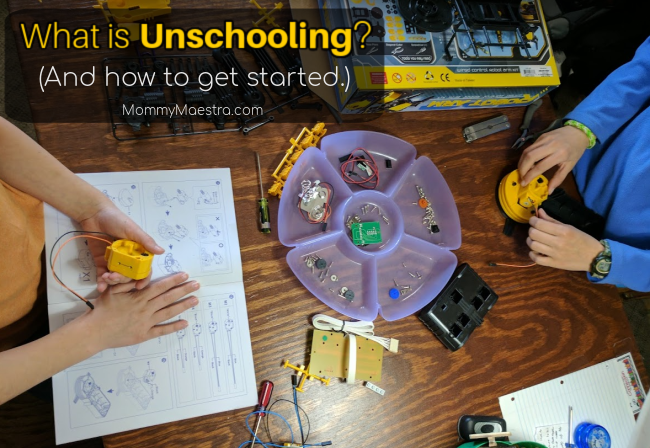
What is Unschooling? How to Get Started

What is unschooling?

This post is part of a new series that dives deeper into the different homeschooling methods that families follow. For a brief overview of the different styles, check out my post on homeschool method descriptions.

Parents often start their homeschooling days by giving their children a schedule with specific subjects to learn such as math, science, and history. After attempting to do this, the parents recognize that their child isn't interested in any or all of them.

At this point, many homeschool parents begin to question themselves thinking perhaps they don't have the ability to teach their children and their child is struggling in school.

But what if you were to step back and take a look at things from a different perspective? What if you didn't see it as not being able to teach your kids but that they just weren't ready for those subjects? Or maybe they just weren't ready to learn in the style you were using?

This is when many parents begin to think outside of the box. They start looking at other options for homeschool education, such as unschooling. 

Unschooling

What is the unschooling method?


Unschooling is a form of homeschooling in which students are given more freedom to learn on their own terms. They may pursue whatever interests they have and ask questions when things don't make sense, rather than following specific curriculum plans with set lessons for each subject area like many other forms of schooling do.

Homeschoolers who unschool their children focus more on the experimental process of learning and becoming educated rather than on "doing school." Unschooling is an active method for these learners as they are given control over what will be learned in each particular lesson or project.

The child decides how much information he/she wants to absorb from each source; this sometimes leads them outside traditional avenues where knowledge has been prescribed by teachers without discussion starters such as lectures.

Unschooling is a natural curiosity-driven way of homeschooling. It means not placing artificial time constraints on your child like the introduction of certain subjects at specific ages, or structuring their day in any particular way that might be familiar to them from school settings. Instead, unschooled kids explore everything they are interested in without restrictions.

Unschooling

How to Start Unschooling


Now that I shared what unschooling is all about, you're probably wondering how you can start unschooling your children. The first step is to determine if this process is allowed in your state.

While homeschooling is legal in all 50 states, some states are stricter about the approach to education than others. It's best to research your state's homeschool laws at HSLDA.org before making the switch to unschooling.

Once you know that your state is a region that allows unschooling to work for your family, it's time to get started unschooling:
  • Research and talk to other families who unschool to start to get feel for options that work for other children.
  • Talk to your children to see what goals and interests they have. Use this information to help mold your first unschooling attempt.
  • Make a choice if you'll incorporate any mainstream homeschool education options, such as workbooks or formal curriculum-based studies.
  • Start with an unschooling method that feels right for your family.

Do unschoolers learn math?


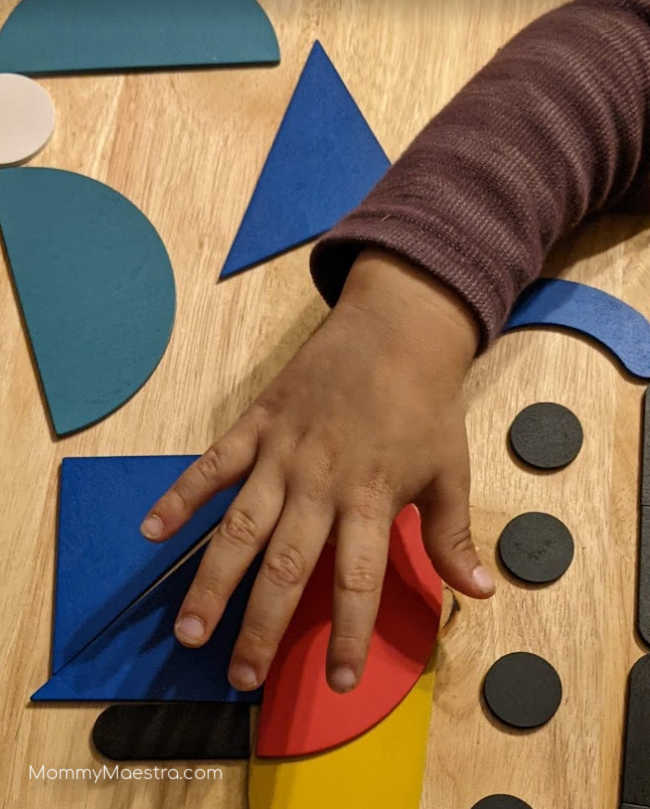
Yes, unschoolers do learn math. Math is a part of everyday living and experience and can be integrated into your child's interest areas.

For example: If your child enjoys cooking, you could work together to make up recipes and do measurements together as well as follow specific recipes provided in books or online.

You could also introduce counting by completing activities that involve counting out objects, such as silverware for a picnic.

Is it possible to unschool through high school?


Yes, many unschoolers continue their learning right through high school. Although some homeschooling families may switch educational methods during the children's high school years if the child is interested in attending a university or college.

Unschooling is a less formal way to make certain that your children get an education without the stress that comes from the other traditional methods of learning. Some people hear the term “unschooling” and think that the children aren’t being educated. This thought process is incorrect.

Children are always learning. They learn from real experiences, rather than through artificial means of introducing subjects to them during specific times periods at school.

Many families who unschool use the relaxed educational approach as a way to teach their children about everything they need to know without feeling restricted by time or curriculum restraints.

Unschooling

Is unschooling a good idea?


In all honesty, only you can determine if unschooling is right for your family. However, if your children are struggling with traditional methods of homeschooling or in-person schooling then it may be time to try the unschooling approach.

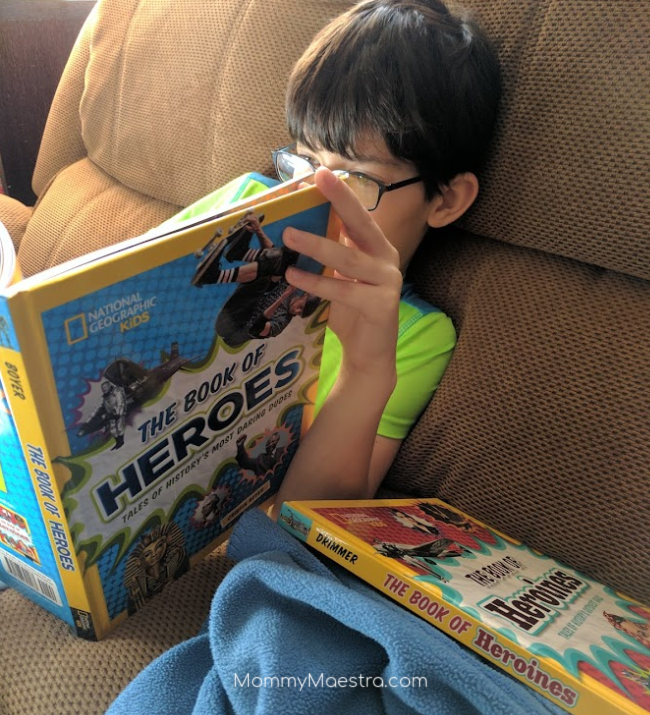
One of the most popular reasons for unschooling is to see your children thrive. Children are curious by nature, which means they will soak up everything around them if they are allowed to do so. This type of learning can help unleash their creativity and potential in a way that many traditional schools cannot offer.

Just to recap unschooling is a natural curiosity-driven method of homeschooling that encourages your children to learn through interest-based methods. The unschooling method may change throughout the duration of your child's years of homeschooling, but one fact remains true; unschooled children lead the way for their parents to encourage a love of reading, learning, and living through everyday experiences.

Want to find this post again? Pin it!

What is Unschooling...and how to begin

Other Posts that May Interest You


Tuesday, June 1, 2010

A Brief Description of Homeschooling Methods

A brief description of homeschooling methods

There are a variety of methods and teaching styles that a family can use to homeschool their children. The ultimate goal is to choose the one that works best for both the parent and the child.


Here are some of the more common methods used in homeschooling...

1. Charlotte Mason


A method created by British educator, Charlotte Mason, who believed that education is a combination of three areas: Atmosphere, Discipline, and Life. She stated that children

• learn from their home environment or surroundings (Atmosphere)
• should be taught good habits of character (Discipline)
• should be taught using living thoughts and ideas (Life)


Charlotte Mason homeschoolers rely on books written by authors who are passionate about the subject, as opposed to dry textbooks. The goal is to inspire and retain, rather than indifferent memorization.

You can find a more in-depth description of the Charlotte Mason method in our post, Homeschooling the Charlotte Mason Way.


2. Classical


A principle that centers around the idea that children develop in three different stages called the Trivium. The first stage, or grammar stage, recognizes that children are born with the capacity to absorb and store tremendous amounts of information. Next, they progress to the dialectic stage where their abilities to reason are refined. And finally is the rhetoric stage, which focuses on self-discovery and creative expression.

According to the Classical Christian Homeschooling page defines the trivium as “instructional stages that correspond to cognitive development… and as a natural process that is followed anytime any person of any age learns something new.” You can learn more about the Classical method here.


Waldorf method
Photo by Rounien & Rjabinnik


3. Waldorf


A holistic approach to learning that views the arts, humanities, and sciences as interwoven with one another, not as separate fields of life or experience. This method focuses on a true liberal arts education where the student takes all subjects and not only those in which they excel. There is a strong emphasis on rhythm and balance in the child’s life, beginning in early childhood.

Again, three stages are identified, but the philosophical approach is different from Classical and C.M. The first stage focuses on the early years (birth through age 7), with a relaxed approach that emphasizes rhythm, balance, opportunity for unstructured creative play, and no formal teaching.

The second stage (ages 7 – 14) takes an artistic/imaginative approach to engage the child’s emotions. Teaching is divided into 3 - 6-week lesson blocks. The child is taught to create Good Books - or Main Lesson Books - that display the activities, essays, poems, drawings and other work created as part of understanding the topic.

The final stage is the high school years. Students continue the development of Good Books, but the work intensifies.

To explore the Waldorf method more in-depth, check out this excellent article by Donna Simmons from Christopherus Homeschool Resources.


Montessori method
© Can Stock Photo / halfpoint


4. Montessori


The main goal of the Montessori Method is to promote the joy of learning through a hands-on and step-by-step approach that emphasizes repetition. The method is based on the belief that children should be free to succeed and learn without restriction or criticism.

In the early years, children are taught to develop their observation skills through a variety of hands-on activities that explore the senses, movement, and coordination. The child is provided with a safe but stimulating environment where they can explore and learn without fear of harm.

Grade school children are allowed to proceed at their own pace, exploring the subjects of math, science, reading, and writing in such a way as to develop their abstract thinking ability. There is a great emphasis on encouraging the child to absorb their environment and culture.

For more information on the Montessori Method, please check out the Montessori Mom.

If you'd like to read a fabulous post about Montessori in the Latino home, check out Stacie's post Homeschooling the Montessori Way here on MommyMaestra.


5. Unschooling


Unschooling is hard to define as there are a number of ways to interpret it. It is based on the research of John Holt as described in his book, “How Children Learn” as well as the research done by John Taylor Gatto. In his book, John Holt describes unschooling the following way:

"Birds fly, fish swim, man thinks and learns. Therefore, we do not need to motivate children into learning by wheedling, bribing or bullying. We do not need to keep picking away at their minds to make sure they are learning. What we need to do, and all we need to do, is bring as much of the world as we can into the school and classroom (in our case, into their lives); give children as much help and guidance as they ask for; listen respectfully when they feel like talking; and then get out of the way. We can trust them to do the rest."

There is a greater emphasis on internalizing concepts rather than mindless memorization. Check out my post on unschooling and how to get started.

For more information, visit Unschooling.com


6. Traditional Textbook


Parents buy a complete curriculum provided by one of the many companies tailored to homeschooling. The complete set includes all the books and tools needed to complete the school year and tend to be textbook oriented.


7. Unit Studies


Parents focus on one single topic and cover the core subjects (math, science, reading, social studies, etc.) using lesson plans that revolve around it. For example, you could choose to focus on the Middle Ages and teach the subjects with this theme.

There are hundreds of unit studies available on the Internet, simply Google your topic and add the term “Unit Study.”


8. Delight Directed/Interest Led


In this approach, parents structure their child’s curriculum around the child’s interests. By incorporating complementary materials, parents can foster and develop their child’s interest. For example, if my daughter was fond of butterflies, I would use lesson plans that talk about the life cycle of butterflies, maybe do a science experiment raising caterpillars, start a garden with plant species that attract these little bugs, read books about metamorphosis, and so on.


9. Eclectic


I think this may be the most common style of teaching among homeschoolers. Eclectic is a mix of philosophies, methods, and curricula tailored to best suit your child’s way of learning. Parents can focus on themes and lessons that interest their child and use them to teach concepts across the table (i.e., math, reading, science may all revolve around the Civil War or Ancient Egypt). Your curriculum may be a mix of textbooks and living books, Montessori activities, and Waldorf Good Books.

--------

Believe it or not, this is only a brief introduction to some of the teaching philosophies and methods in use by homeschooling families. Keep in mind, that each practice presented here could and should be ultimately molded by each homeschool family to create the best environment for them. So although Montessori may emphasize the embracing of culture, this does not mean that if you choose the Waldorf method you can’t teach culture, traditions, and language.

Ultimately, I think each family should choose the method – or methods – that work best for them AND their children. This can be difficult, but like any good recipe, when a chef gets the ingredients just right, the result is spectacular!


Did you enjoy this article? Are you thinking about homeschooling your child? Let me help! My book - The Latino Family's Guide to Homeschooling - covers everything you see here and more. 


top photo credit: © Can Stock Photo / EkaterinaMo

LinkWithin

Related Posts Plugin for WordPress, Blogger...