It's true. This Lego-loving family is excited...

Friday, November 8, 2013
Thursday, November 7, 2013
5 Things To Consider When Choosing Bilingual Homeschooling

Please welcome Denise Leitch, author of today's awesome guest post.
“Bilingual what?” was the first thing that came out of my mother’s mouth when I was informing my parents that, as a family, we had decided on bilingual homeschooling for our children’s education. I just laughed - I may have also rolled my eyes - switched to Spanish, and started desde el comienzo. I began to explain what homeschooling is and how it works to my Chilean parents.
To me, for cultural and personal reasons, it is important to have my parents’ approval and support with the most important decisions in my life. Even though I am a grown, independent woman, I am from Chile and due to culture and my family’s ways, having their support is truly valuable.
I knew that homeschooling would not be their first choice, nor their most desired option for their grandchildren (due to ignorance on the topic more than anything else), but I did not let this be an obstacle in making my final decision on bilingual homeschooling.
Are you considering bilingual homeschooling for your children? If so, what is stopping you? What obstacles are you facing? Why haven’t you taken the plunge yet?

To be honest, I can tell you that I had quite a few rational reasons why I should not homeschool. So by no means was it an easy decision for us either.
Bilingual homeschooling was the right choice for us, I know that now.
What about you?
I want to share with you five tips that may help you arrive at your final decision as you consider this option for your family.
1. Be honest with yourself and find your own reasons and motivations for choosing bilingual homeschooling.

Bilingual homeschooling should not be picked because it is the new trend nor because it is what so-and-so advised you to do.
Yes, bilingual homeschooling is pretty cool. I have to admit it, but it is not easy and it is definitely something you cannot ‘wing.’ This is coming from a person who has been teaching foreign languages to young children for over 10 years and I still think it takes a lot of planning and dedication.
One of the questions you should ask yourself is: What are your reasons and/or motivations for considering bilingual homeschooling? Whatever they may be, they need to be strong enough to propel you through good times and tough times.
I can assure you that once you have your own reasons why you are choosing bilingual homeschooling, you will succeed.
So, establish your goals and go for it.
From my perspective, if your ultimate goal is for your children to be multilingual and multicultural, then bilingual homeschooling is definitely a great option for your family.
My top three motivations are:
- Minority language becomes just as important
- Keep culture and heritage
- Travel flexibility
What are yours goals, motivations, and reasons for choosing bilingual homeschooling?
2. Don’t drown on all the information that is available ‘out there.’ Do what works for you. Find your own unique rhythm.

Too much information can be overwhelming, do not let it get to you! And definitely, do not let it stop you.
Know what resources are available, but do not depend on them nor let it overwhelm you to the point where you no longer want to try it.
I say this because I know the feeling and I still do. I see what other families are doing, read about their exciting projects, trips, ideas and I think to myself, I am not capable of that. Well, that is because I am not them! I am me and that is OK. Our family has its own rhythm. It works for us. Do what works for you!
When you add another language to your curriculum, it gets a little trickier, but remember, there is no right or wrong. Try some of the tips you find online, in books, podcasts or wherever, but do not get discouraged if they do not work in your home. There are many resources and philosophies out there. But again, the bottom line is, do what works for you!
As a foreign language instructor to young children I have had to do this on a regular basis for the past 10 years!
Find resources that will match your rhythm.
3. Find the right support. You are not alone.

Even though there are many homeschooling groups and tons of websites about it, you still feel alone once you take the first step. But guess what? You are not alone! Just remember that.
I have joined a few homeschooling groups through Facebook that have been the perfect support. To be honest, I have yet to truly participate and collaborate, but knowing that they are there for me if I need help and support is just what I need. There are many wonderful websites such as this one that will provide you with all kinds of information and support.
Take action and find the support that will match your needs.
4. Embrace the concept of learning together. Make mistakes.

It is OK to admit that we do not know everything to our children. Learning together is a beautiful process and a powerful one. And in terms of planning, I feel that as long as I stay one step ahead… we are good.
As we considered the idea of homeschooling, reading and writing in English was a big obstacle for me. After 15 years of living in the United States, I still make mistakes on a regular basis and I do not know all the phonetics and grammatical rules there are to know. I felt weak and incapable of teaching our children the ‘right way’ if I did not master the language myself. Man, was I wrong!!
To my surprise, my children seem to enjoy this side of me that makes mistakes and needs assistance. They gain lots of pleasure when Mami has a hard time pronouncing a word in English. Not to mention that they feel empowered by helping me and teaching me! They become my mentors. What a beautiful and exciting moment that is. I welcome it and use it to understand in more depth how they feel when they are being corrected and guided as I teach them other languages and subjects.
As you adventure into bilingual homeschooling, you will make mistakes and you will mispronounce things. Should this stop you from doing it? No! Learn from your mistakes together, have your children involved as much as possible and allow them to be active participants in the learning process. Empower them. Allow them to shine.
Finally, I should note that if there is something I do not know, we search for the answer together. In addition, if I am suppose to teach them about something I am not familiar with, I make sure to learn about it before I sit down with them and work on it together. I just try to stay one step ahead when possible so I do not get too overwhelmed.
Learning together is very powerful, embrace it and enjoy it! But most importantly, do not be afraid to make mistakes.
5. Deciding on the target languages.

Growing up in a multilingual environment is one of the best gifts we can give our children. I truly believe in this statement. If you agree with me, then bilingual homeschooling is definitely something to consider or even try in your home.
Some of you may not be fluent in the target languages.
Don’t let this stop you.
Some of you may not know how to break it down and teach it to your young children.
Don’t let this stop you.
Some of you may not know what languages to focus on.
Don’t let this stop you.
You get the idea.
No matter what your obstacles are if you have a great goal in mind for your family and you feel passionate enough to go after it and attain it, I say there should be nothing to stop you.
Take the plunge. You will see that step by step, one day at a time, you will make it. This is a wonderful adventure and a beautiful journey to enjoy as a family.
Resources:
If you are a book worm like me, here is a list of books to get you started. This is the same list I recommend to all the parents of my students who -like you- have the goal to raise multilingual children.If you are more of a visual person and like to watch informative videos or look at colorful infographics about raising multilingual children, here is some information I have gathered in my ‘Benefits of Multilingualism’ board on Pinterest.
If you are wanting to see a list of useful links all about bilingual parenting and multilingual education, click here.
Finally, I welcome you to visit my site for supplemental resources. On a regular basis, I post about what I am doing at home and in the classroom. And recently, since we took the plunge, I have also started sharing our bilingual homeschooling adventure.
I can only hope that these resources will help you (1) determine your goals, motivations, and reasons for choosing bilingual homeschooling, (2) find what matches your rhythm, and (3) inspire you to take action and find the support that will match your needs.
-------------------------------------------

Denise Leitch is a devoted mother of two and an energetic educator who specializes in early childhood and elementary foreign language education. She believes in the power of collaboration and lifelong learning.
Her goal is to help, motivate, and inspire her readers over at her blog, linguagarden.com.

Wednesday, November 6, 2013
5 Ways to Teach Gratitude

The holidays are officially here! Halloween and Dia de los Muertos have passed and we now have beautiful new memories in our heads and loads of sweets we can't finish fast enough. Everywhere we look, we can't help but feel the pressure of the seasonal commercialism, and our kids start to make lists way too long for Santa to fully accommodate.
Now we are welcoming November with open arms and we focus on projects that remind our children to show gratitude. I think of how our family has been trying to teach our kids that thankfulness and gratitude is something we should show every day--all year long.
It is not easy to even hear a "thank you" from children in a consistent manner, and just like we teach other fundamentals over and over, practicing gratitude is just as important to reinforce. Here are five ideas to incorporate in your child's every day lives.
1) Write thank you notes. Every year, my boys receive birthday gifts, just-because presents and tons of books and clothes throughout the months. No matter who is sending a package or footing a bill, help your child give thanks by simply sending a little note. Mail always makes things more fun!
2) Go around the dinner table and describe your appreciation. Why wait for Thanksgiving? Every day whether it be at breakfast time or lunch time, children can get into a quick habit of thinking what made their day so special that it motivated them to say thanks.
3) Give. We always talk about the less fortunate. We always try to say yes to people asking for small donations and we explain to our oldest why we give. Simple tasks such as watching us donate old clothes and toys is a great way to teach kids to be thankful for the basics such as having warm clothes during this time of year.
4) Have kids help around the house. Just yesterday, I watched my almost three-year old son trying so hard to put his empty dinner dishes in the sink. He couldn't reach! He kept trying and trying but I wouldn't help because I knew he was safe and that if his task takes some effort, he will appreciate it greatly next time someone else helps him out.
5) Try not to say YES! We would love to give our kids every single thing they ask for...all the time. Who doesn't? I remember growing up and wanting the latest sneakers and my brother begging for a specific video game. My parents had to say no a lot because of their financial situation. When they did splurge on something small or big, we were very, very grateful.
What are some other ways we can teach gratitude at home? Please share!
Image: Viva Greetings
--------------------------------------

Betty Galvan, is helping her readers "find the positive and seek the benefits" over at her blog, MyFriendBettySays.com.
Tuesday, November 5, 2013
Sesame Street Workshop Helps Children Make Healthy Food Choices
 |
| Official White House Photo by Lawrence Jackson |
Elmo and Rosita are making healthy fruits and veggies more attractive to children. In fact, you'll probably be seeing more of them in your local grocery store before too long.
Last Wednesday, First Lady Michelle Obama announced that Sesame Street Workshop and the Produce Marketing Association (PMA) have joined the Partnership for a Healthier America (PHA) in a 2-year agreement to help promote fresh fruit and vegetable consumption to kids, making those healthy choices a little easier for busy parents and families to make.
This agreement simply allows PMA’s community of growers, suppliers, and retailers to utilize the strength and influence of the Sesame Street brand without a licensing fee, using characters like Big Bird, Elmo, Rosita and Abby Cadabby to help deliver messages about fresh fruits and vegetables.
What a great idea, no? I've frequently grumbled loudly and lamented over the fact that so many popular characters in children's shows and movies are often placed on the covers of boxes containing sugary, processed foods that are bad for my child's health. On more than one occasion, my children have pleaded for me to purchase junk food simply because of the packaging. And, yes, in a moment of weakness, I once caved and bought a box of some horrible high-sugar cookie when my son begged for me to get it, simply because it had a picture of Scooby on the front. Never again.
I want to know: Why don't companies like Disney and Warner Brothers use their popular animated characters to sell healthy food items and help encourage children to make wise choices when it comes to snacks?
UPDATE: It was pointed out to me that Disney is the first major media company to introduce new standards for food advertising on programming targeting kids and families.
That incident, however, totally drove it home for me how vulnerable children are to suggestion. So really, it comes as no surprise that a recent study published in the Archives of Pediatrics and Adolescent Medicine showed the number of children who chose apples over cookies nearly doubled when an Elmo sticker was placed on the apple. Popular characters can play a strong role in influencing kids’ food choices and the Sesame Street/PMA commitment aims to influence healthy choices.
I've written more than once about the Latino children's obesity crisis. In fact, you can find all of my posts on this issue here. And because this problem has such a tremendous impact on Latino children, you'll be seeing more posts here on MommyMaestra to help parents fight obesity in their children by help them be more active and make wiser food choices.
I want to leave you with this special video from our wonderful amiga Rosita, who recorded a message for children everywhere...
I want to leave you with this special video from our wonderful amiga Rosita, who recorded a message for children everywhere...
You May Also Enjoy These Posts:
Monday, November 4, 2013
Hot Apple Cider Recipe

This post contains an affiliate link.
Happiest fall to you! The days have grown cooler and the nights un poco frío where we are in North Carolina. I'm not quite ready for winter, though I welcome the fall. And so today, as a Little Passports Ambassador, I want to share with you this yummy hot apple cider recipe (affiliate link) that they've created to help warm our days and nights.
How many of you enjoy sipping on a cup of hot apple cider? Or do you prefer one of the Latin American hot drinks listed below? (These are some great recipes!)
- Champurrado by The Other Side of the Tortilla
- Café de Olla Atole on latinamom.me
- Mayan Hot Chocolate by Latinaish
- Atol de elote by Latinaish
I haven't tried all of these yummy drinks, but I want to! Preparing recipes like these with your children are great ways to help them practice math skills (like measurement), following directions, and observing chemical reactions, while exploring different cultures - or their own!
Or does your family like something else entirely?
Wednesday, October 30, 2013
Boo Bags! Combining Two Traditions

Last year, after answering the doorbell to a "ghost," we were pleasantly surprised to find a Halloween goody bag on our front steps with the following message attached:
Soon Halloween will come to all.
Ghosts and goblins, spooks galore...
Tricky witches at your door.
The Spooks are after things to do,
In fact a spook brought this "Boo" to you!
The excitement comes when friends like you,
Copy this note and make it two.
We'll all have smiles upon our faces,
No one will know who "Boo"ed your places!
Just two short days to work your spell,
Keep it secret, hide it well.
Please join the fun,
the season is here.
Just spread these "Boo's"
and Halloween cheer.
Of course, we joined the fun! This year, along with tasty treats, Halloween stickers and glow-in-the-dark fangs, we also included a Day of the Dead Activity Book I purchased through Oriental Trading. I really wanted my boys to have this book, but I realized that they came in a pack of 12. Having already bought the goody bags to fill, I thought it was a fantastic deal given the the books are full of educational information and loads of fun! So we put them in there! My six year-old, Diego, thought they would be a great hint to his neighborhood friends that the Boo Bags were from him!

My two older boys were involved in filling the bags, although Diego was the only one running in the night, ringing the doorbell and running for his life! You can't get caught while out ghosting your friends! I have to admit that parents have a great time waiting in the getaway car for their little ghosts!

This mama approves of the Day of the Dead Activity Book!

Boo Bags ready! Leave it to this teacher-mom to find a way to combine a tradition that is new to us and to incorporate one that has existed in our Mexican culture for so long. Have a safe and happy Halloween!
--------------------------------------
Betty Galvan, is helping her readers "find the positive and seek the benefits" over at her blog, MyFriendBettySays.com.
She is the mother of three beautiful little boys and a teacher.
Tuesday, October 29, 2013
Day of the Dead Bilingual Activity Pack for Preschoolers

It is time for another MommyMaestra printable! My latest Día de los Muertos download was designed to keep los nenes busy this weekend while teaching them basic counting, graphing skills, cutting practice, and so much more.
In fact, this Day of the Dead Activity Pack for preschoolers and kindergartners includes:
- Number recognition (1-10)
- Finish the pattern
- Find the difference
- Size sequencing
- Montessori nomenclature cards (English & Spanish)
- Book List of Day of the Dead Picture Books (Bilingual)
- Maze
- Graphing
- Printable, full-color Día de los Muertos banner
- Bingo cards
So head on over and get yours. It will be free through this Sunday.
And please, if you download this printable from my TpT store, please leave some feedback.
TY!
Sunday, October 27, 2013
Ofrendas: Celebrating Day of the Dead eBook

Last week, some amazing blogger friends of mine released this incredibly beautiful eBook for Day of the Dead. Ofrendas: Celebrating Day of the Dead includes recipes and crafts to make in honor of the holiday, all of them family friendly (with a few extra recipes for parents). The entire book is bilingual with full text in both English and Spanish. I hope you enjoy it and share with your amigos! Click on the image below to read it for free!
Friday, October 25, 2013
Curious George: A Halloween Boo Fest!
 |
| Courtesy of CG ® & © 2013 Universal Studios and/or HMH. All Rights Reserved. |
Oh, come on. Who hasn't thought of the Man in the Yellow Hat as just a giant platano (banana) anyway?
This coming Monday, the first-ever Curious George Halloween special, CURIOUS GEORGE: A Halloween Boo Fest!, premieres on PBS KIDS. The one-hour special features three original songs, including “It’s Halloween Today,” sung by Pat Monahan, the lead singer of Train.
Here's a short description of this new episode:
It’s George’s first Halloween in the country, and Bill tells him and Allie about the “Legend of No Noggin” – a spooky tale about a hat-kicking scarecrow who haunts the countryside on Halloween. But is the legend real? George and Allie are determined to find out by taking a picture of No Noggin in hat-kicking action. But first, George needs to figure out what he’s going to be for Halloween so he can win the costume contest at the town Boo Festival and give the prize to the Man with the Yellow Hat. Will George be able to put together the perfect costume and find out the truth about No Noggin? Only the curious will find out!
But you can really just watch this teaser with your kids...
In fact, this episode kicks off a whole week of Halloween-themed programming on PBS KIDS. You'll just have to watch and be surprised about all the holiday goodness!
And of course, in true PBS KIDS fashion, because they believe in the power of transmedia storytelling, PBS KIDS has launched a new Curious George online game to accompany the show. In it, your child will use problem-solving and logical thinking skills as he or she explores a pumpkin patch with George, encountering playful spooky surprises along the way. It's cute. My son, who loves all things George even though he is 7, loved it. The site even features games and free printables in both English and Spanish (another reason I love PBS KIDS).

So don't forget to watch this Monday! And have a happy Halloween week...
Disclosure: I'm a PBS KIDS Ambassador. I was not, however, compensated for this post, but received information about the new episode. All thoughts and opinions expressed above are completely my own!
Thursday, October 24, 2013
The Young People's Ofrenda Project
Do you know about the Young People's Ofrenda project in Minneapolis?
I cannot remember if I shared this video last year and if I did, I couldn't find it while I was digging around through my archives. But I really love it and the project behind it. The Young People's Ofrenda project is an award-winning collaborative project between El-Colegio Charter school and the Minneapolis Institute of Arts that engages students to participate in the holiday by celebrating their ancestors that have passed on.
Young People's Ofrendas:
Expressions of Life and Remembrance
This year's exhibit at the Minneapolis Institute of Arts opened on Tuesday and runs through November 24th in Gallery 110. And admission is free! I so wish I could take my kids to see it. If you live in the area and go to visit, please snap some pics and tell us what you and your kids think of it!
If you are interested in the project and doing a similar one at home or at your school, MIA does offer downloadable Teacher's Guides in both English and Spanish. The project has five phases. Students must:
- Honor their ancestors
- Turn their ideas into images
- Create a personal ofrenda
- Write an artist's statement
- Exhibit the ofrendas
As part of the project, these particular students had to video log their projects.
But you can learn so much more by visiting their website, as well as by watching this short video produced a couple of years ago...
Wednesday, October 23, 2013
Zaner-Bloser Spanish Cursive Handwriting Prize Package {GIVEAWAY}

To accompany today's post on English and Spanish Cursive Writing Materials, I'm happy to host this giveaway from Zaner-Bloser. According to their website, the Zaner-Bloser Handwriting program "provides developmentally appropriate practice activities to promote automaticity [so that] students become more fluent at manuscript and cursive handwriting."
I have not personally used the Zaner-Bloser Handwriting program, so this is not a review. They offered the set you see above to be given to one MommyMaestra reader through a giveaway on my site. If you enter and win this giveaway, I'd love to know your thoughts about the materials.
The set above includes one Grade 2C Student Edition, one Grade 2C Teacher Guide, and a one-year license for ZB FontsOnline Plus. I think that the access to the FontsOnline Plus which allows you to create, save, and edit worksheets (or other documents) using their manuscript and cursive alphabets, is especially intriguing and one I'd love to have for use with my kids.
To enter this giveaway, simply use the Rafflecopter below.
a Rafflecopter giveaway
Cursive Learning Resources in English and Spanish

Last March, a reader asked me on Facebook if I would share some cursive writing resources in Spanish. Specifically, she was looking for a workbook that had complete sentences in Spanish. A little research yielded quite a few resources, and that has remained on my schedule for months. So enough is enough already, and I thought I'd go ahead and share sites and books in both English and Spanish for those of you whose children are learning to write in cursive.
This post contains affiliate links.
I was fascinated to read about why handwriting is so important for children and how it directly affects impulse control. After reading the article, I thought that adding handwriting lessons would also be an important part of a social emotional learning (SEL) curriculum, which is important in both home and school classrooms.
Other Posts You May Enjoy
I was fascinated to read about why handwriting is so important for children and how it directly affects impulse control. After reading the article, I thought that adding handwriting lessons would also be an important part of a social emotional learning (SEL) curriculum, which is important in both home and school classrooms.
This article on Psychology Today about Why Cursive Handwriting Is Good for Your Brain is also a great read and why I think it is so important for children. Too many schools are dropping it from their curriculum.
And now the resources. These are just a few of the resources I've found. There are MANY others. If you have some you'd like me to add, just let me know in the comments.
English Cursive Writing Resources
And now the resources. These are just a few of the resources I've found. There are MANY others. If you have some you'd like me to add, just let me know in the comments.
English Cursive Writing Resources

- Handwriting Without Tears
- Zaner-Bloser
- Peterson Directed Handwriting
- Donna Young's Cursive Handwriting Lessons - Cursive Z
- Joy of Handwriting
- School Zone - Cursive Writing Workbook
- Teaching Cursive! This Method Works
- Wacky Sentences Handwriting Workbook (Reproducible): Practice Writing in Cursive (Third and Fourth Grade)
- Activity Village: Cursive Handwriting Worksheets
Spanish Cursive Writing Resources
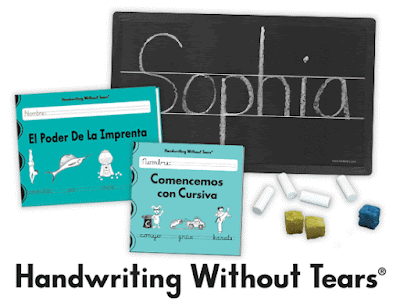
- Handwriting Without Tears
- Zaner-Bloser
- Caligrafía para Primer Ciclo
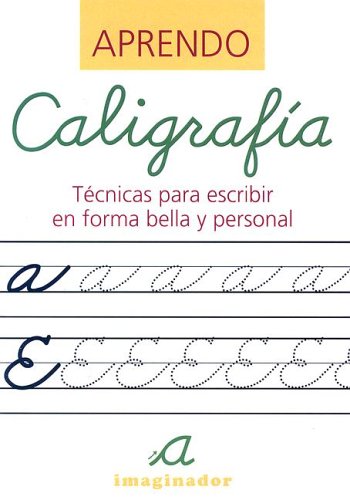
- Aprendo Caligrafia / Learn Calligraphy: Tecnicas para escribir en forma bella y personal / Techniques for writing in beautiful and personal form
- Dibujos para pintar: Hojas de caligrafía para imprimir
- Informática para docentes : Recursos | Fichas de caligrafía
- Fichas para niños : CALIGRAFÍA PARA NIÑOS - FRASES - FICHA 1
- Spanish cursive handwriting workbook | Caligrafía en cursivo EDITABLE
- Spanish Homework - Penmanship - TAREA Caligrafía A-Z from Lectura para niños
Bilingual Tools:
Other Posts You May Enjoy

last updated: 5/12/2022
Subscribe to:
Posts (Atom)
LinkWithin
